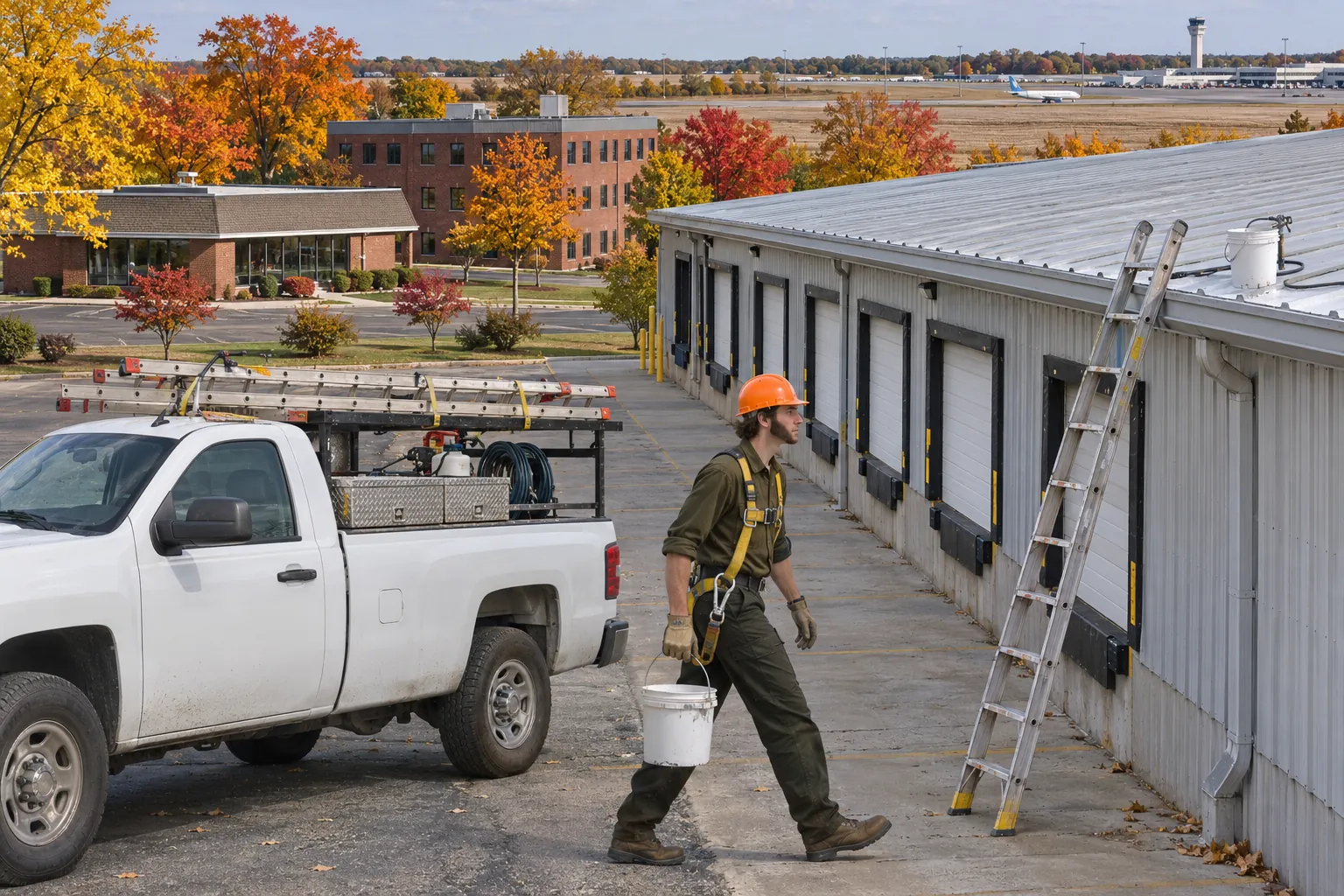
Plain white work truck parked beside a metal warehouse with a ladder at the roof edge
Coating Services

Metal Roof Coating Services in Indianapolis

Five Coating Systems Matched to Metal, Flat, Foam, and Shingle Roofs

Our metal roof coating services in Indianapolis cover five systems, each chosen after we inspect the roof and the materials already on it.

Metal Roof Coating Services in Indianapolis by Roof Type

Metal roof coating services in Indianapolis start with the roof surface you have. Each card shows where a system fits and what we check first.

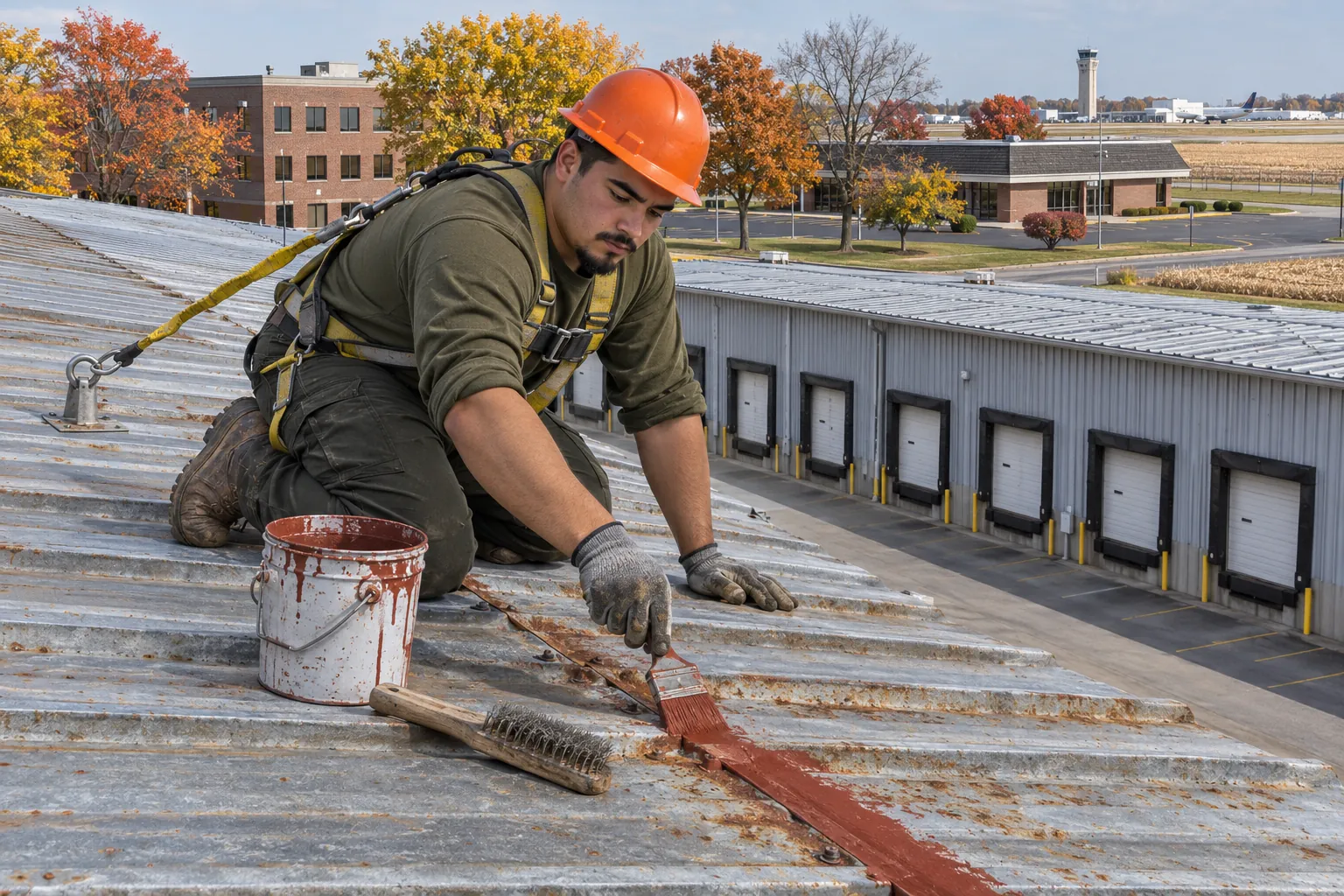
Roofer brushing rust primer along a metal panel seam on a warehouse roof

Commercial Metal Roof Coating

Exposed-fastener and standing-seam steel roofs on warehouses, plants, and shops get rust primer, sealed screws, and reinforced laps, then an elastomeric coat matched to slope and drainage. Most metal buildings in the area start here.

Best For
  • Rusted but firm panels
  • Leaking screw rows
Check First
  • Rust-through areas
  • Wet insulation below
Commercial Metal Roof Coating details →
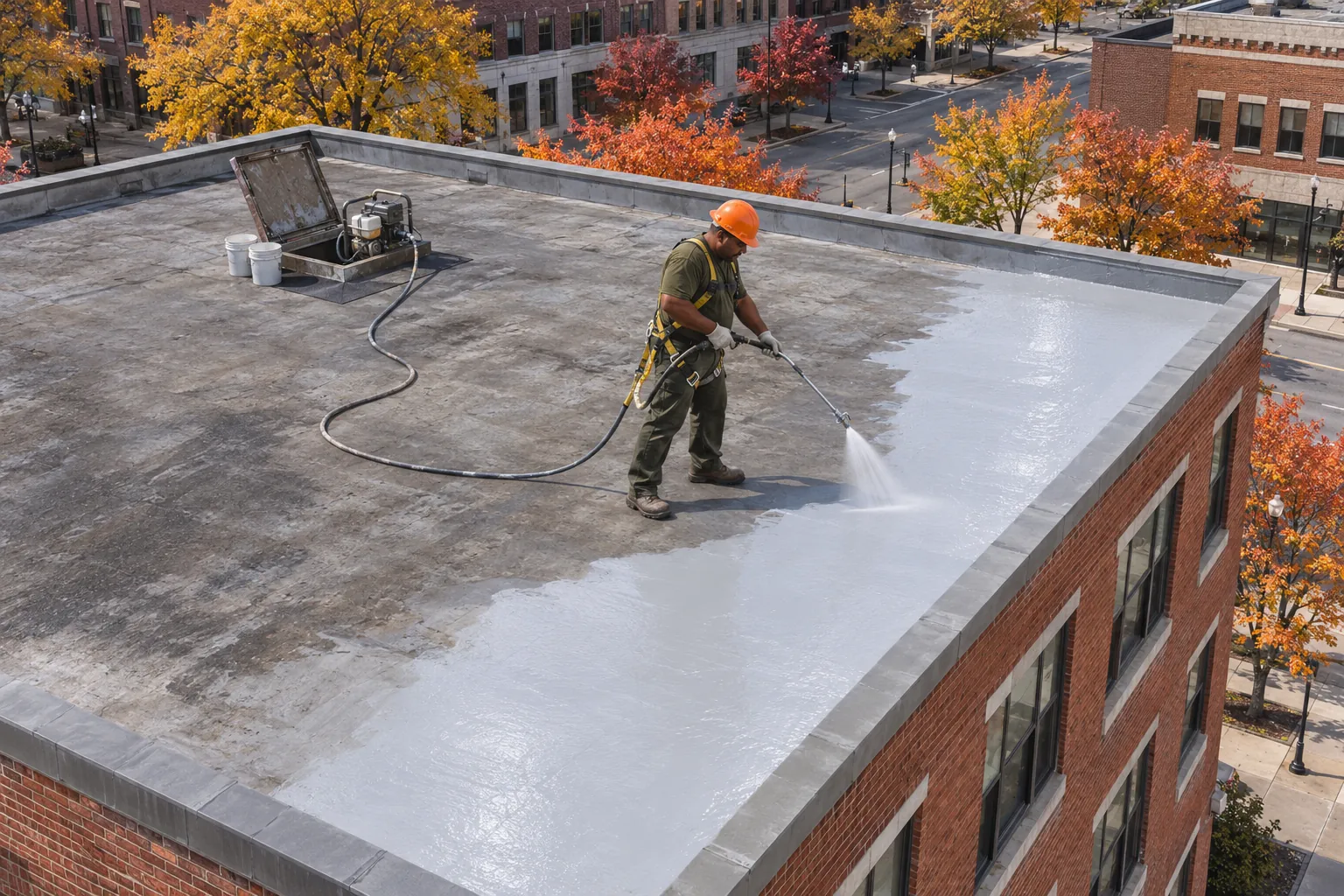
Roofer spraying silicone coating across the flat roof of a brick commercial building

Silicone Roof Coating

Low-slope metal and older flat roofs with slow drainage take silicone over the right primer. It shrugs off brief ponding and summer sun, and later recoats stay with silicone. Moisture checks come before any spraying.

Best For
  • Shallow ponding near drains
  • Aged built-up surfaces
Check First
  • Trapped moisture
  • Peeling old coatings
Silicone Roof Coating details →
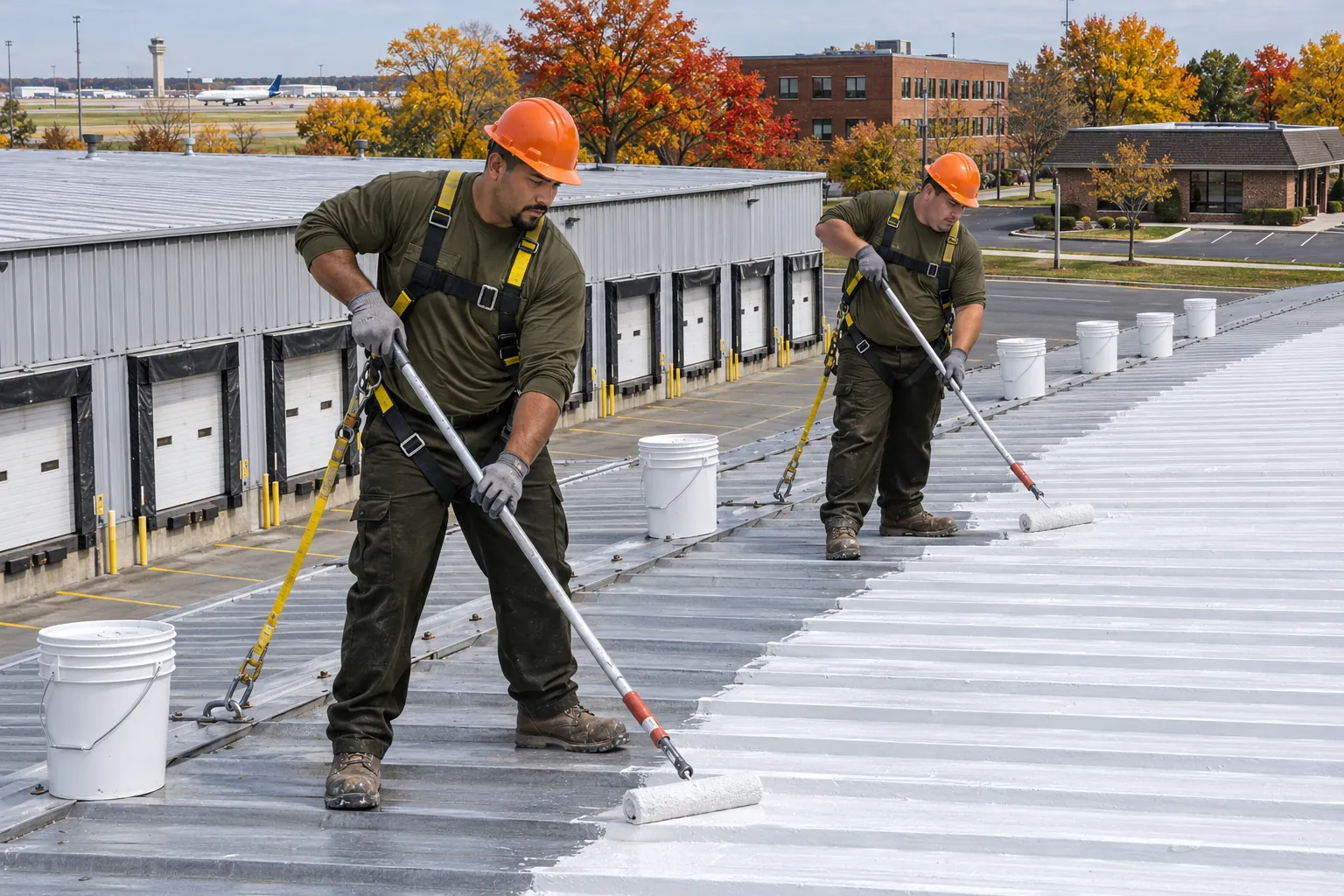
Two roofers rolling acrylic coating onto ribbed metal roof panels above loading docks

Acrylic Roof Coating

Pitched metal roofs that drain fast take acrylic well. It bonds to primed steel, flexes through seasonal movement, and recoats easily, but each coat needs dry, mild days to cure, so scheduling matters.

Best For
  • Sloped metal panels
  • Bright, cooler roof finish
Check First
  • Low areas that hold water
  • Frost in the forecast
Acrylic Roof Coating details →
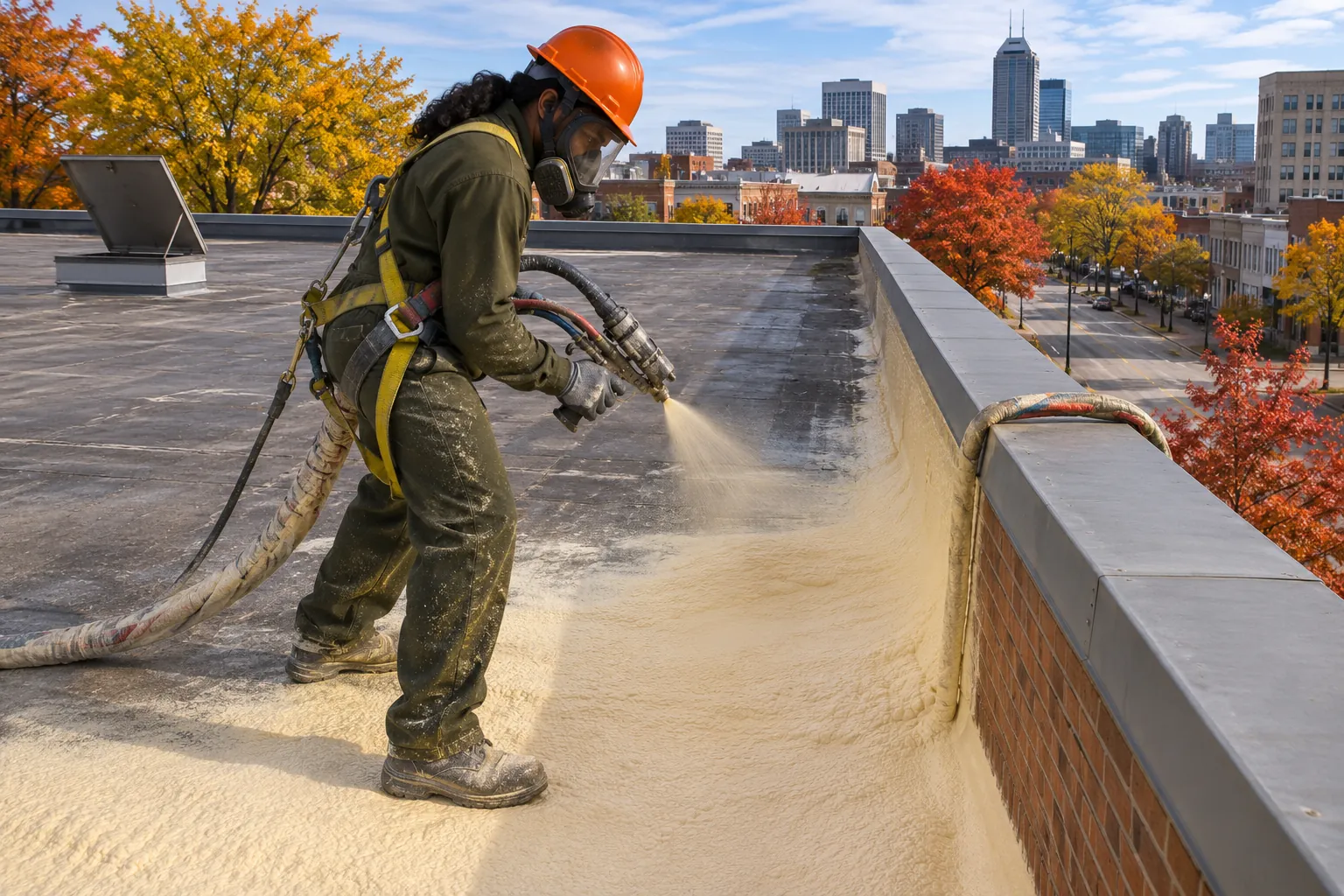
Roofer spraying foam across a flat commercial roof beside a parapet wall

Spray Foam Roofing

Closed-cell foam sprayed over a dry roof adds insulation and covers every lap and screw in one layer. A silicone or acrylic topcoat goes on right after to protect the foam from sunlight and wear.

Best For
  • Roofs leaking at many joints
  • Buildings short on insulation
Check First
  • Wet roof layers
  • Intakes near the spray area
Spray Foam Roofing details →
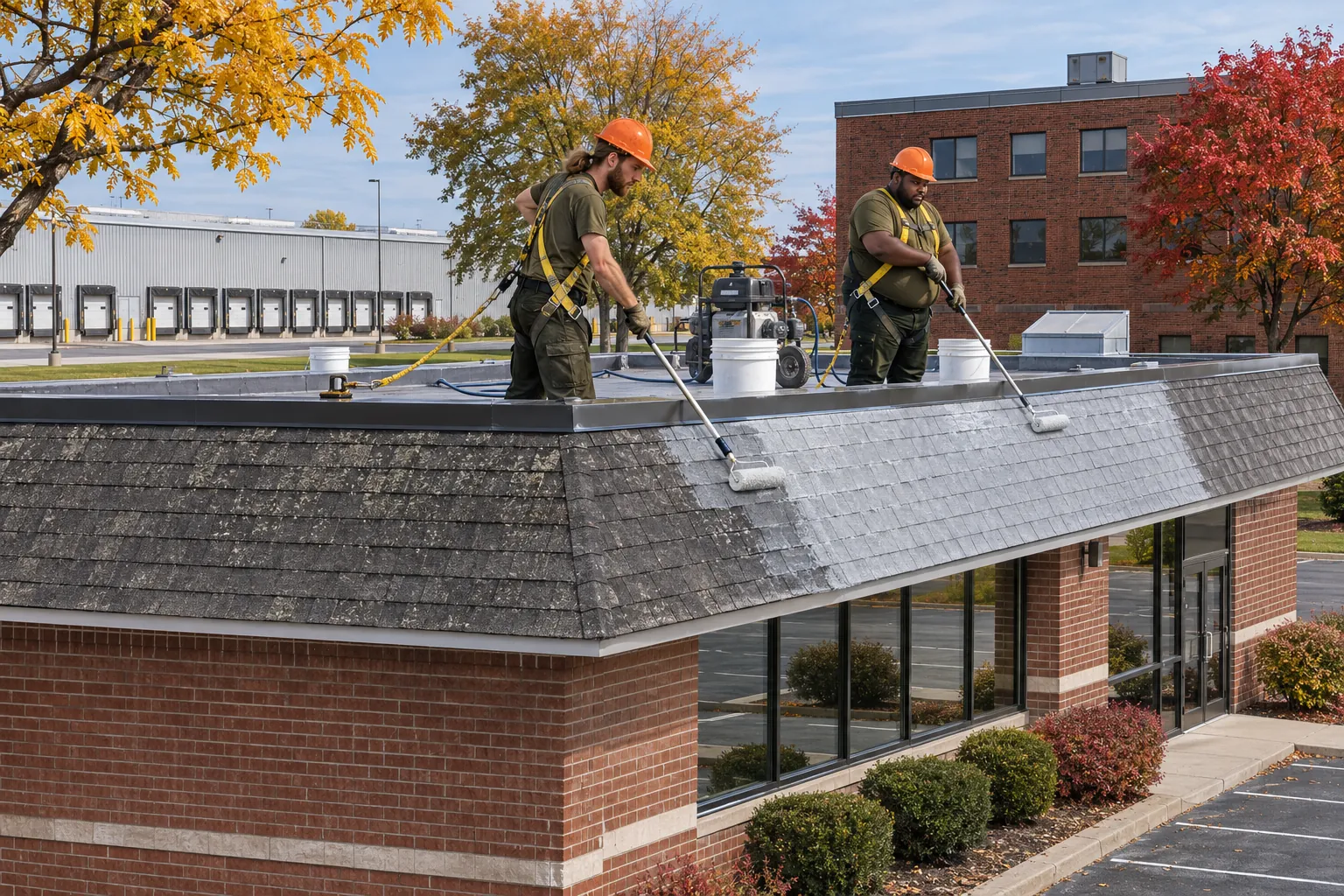
Roofers rolling coating onto the shingle roof of a brick office building

Shingle Roof Coating

Churches, small offices, and mansard storefronts with shingles that still lie flat can be coated after damaged shingles and flashing are repaired. Brittle or curled shingles call for replacement instead.

Best For
  • Flat, attached shingles
  • Leaks at flashing only
Check First
  • Curled or bald shingles
  • Maker warranty terms
Shingle Roof Coating details →

Which System Fits Which Roof

Five systems, compared on the roof conditions that decide between them: surface, standing water, recoat path, and the weather each one needs.

SystemBest SurfaceStanding WaterRecoat WithWeather Needs
Commercial metal roof coatingSteel panels at any pitchSet by the topcoat chosenThe same topcoatDry days for prep and coats
SiliconeLow-slope metal and built-up roofsHandles brief pondingSilicone onlyDry surface at application
AcrylicPitched metal that drains fastWears where water sitsAcrylic or siliconeMild, dry cure days
Spray foamFlat roofs and metal panelsCan be tapered toward drainsFresh topcoatDry roof and low wind
Shingle coatingFlat, attached asphalt shinglesSheds water by slopeMatching shingle coatingMild, dry days

Wondering Which Coating Your Roof Needs?

The inspection answers that. Call us and tell us the roof type and what you see from inside the building.

(317) 930-9376Call Us

How Each Coating Service Starts on Indianapolis Roofs

The same five steps open every coating service, whatever system goes on at the end.

  1. Inspect Your Roof

    Panels, seams, drains, curbs, and the deck are checked, and moisture readings are taken anywhere water could be trapped. Interior stains are traced to their source so each repair is located before pricing.

  2. Match the System

    Slope, drainage, existing coatings, and insulation decide which of the five systems goes on. Roofs with mixed sections can take two systems, joined with flashing at the transition so water crossing it stays on top.

  3. Repair and Prepare

    Rust, screws, laps, flashing, and wet areas are fixed, then the surface is pressure washed and primed with the product the chosen coating calls for. Known defects are repaired before any coat goes over them.

  4. Apply and Measure

    Coats go on to the specified thickness, with wet film checked as each section is finished. Weather windows are watched closely for acrylic and foam, and work pauses when rain or frost is due.

  5. Record the Work

    Products, coat counts, and repair locations are written down and handed over, so future inspections and recoats start from a clear record of what is on the roof.

Questions About Our Coating Services

Which metal roof coating service fits my building?

The inspection decides

Surface, slope, drainage, and existing coatings point to the system. Pitched steel usually takes acrylic or silicone, flat sections with slow drainage take silicone or foam, and flat, attached shingles take a shingle-rated coating. We explain the match after walking the roof.

Do you offer roof replacement too?

Coating and repairs only

Our services cover coating and the repairs that come before it. When a roof is too far gone to coat, we tell you that plainly, show you what we found, and explain why a coating would be the wrong spend.

Can two systems be used on one building?

Yes, by roof section

Buildings with a pitched metal section and a flat addition often get acrylic on one and silicone on the other. Each section is prepared for its own system, and the joint between them is flashed so water crossing it stays on top.

How long does coating work take on a warehouse?

Size and weather set it

Roof size, repair volume, and weather set the schedule. Prep often takes as long as coating, and acrylic needs dry cure days between coats. After the inspection we lay out a sequence by roof section so you can plan around it.

What happens to rooftop units during coating?

Worked around, protected

Units stay in place. Curbs and flashing around them are repaired and coated, intakes are covered during spraying, and service paths are left open so technicians can still reach the equipment while the work goes on.

Do you coat roofs in winter?

Prep yes, coats by forecast

Inspection, screw replacement, and seam repairs carry on through cold months. Coats go down only when the surface is dry and temperatures meet the product's limits, so winter work focuses on repairs and spring brings the coating.

Is a ballpark estimate the same as a quote?

A planning range only

Ballpark ranges come from roof area and published per-square-foot rates. A quote follows the inspection, once rust, fasteners, seams, access, and the chosen system are known, and it lists repairs separately from coating.

Do you work on roofs with solar panels?

Around them, with care

Roofs with solar arrays can be coated in the open areas, and the racking attachments are checked and resealed. Panels are left in place, and anything under them that needs repair is planned with the solar owner, since moving an array is a separate job.

Book Metal Roof Coating Services in Indianapolis

Get a ballpark for your roof, or call to talk through which service fits.

Call Us(317) 930-9376