Metal Panels
Commercial Metal Roof Coating
Exposed-fastener and standing-seam panels on warehouses and shops get rust treatment, sealed screws, and reinforced laps before an elastomeric coat goes on.
Commercial Metal Roof Coating in Indianapolis →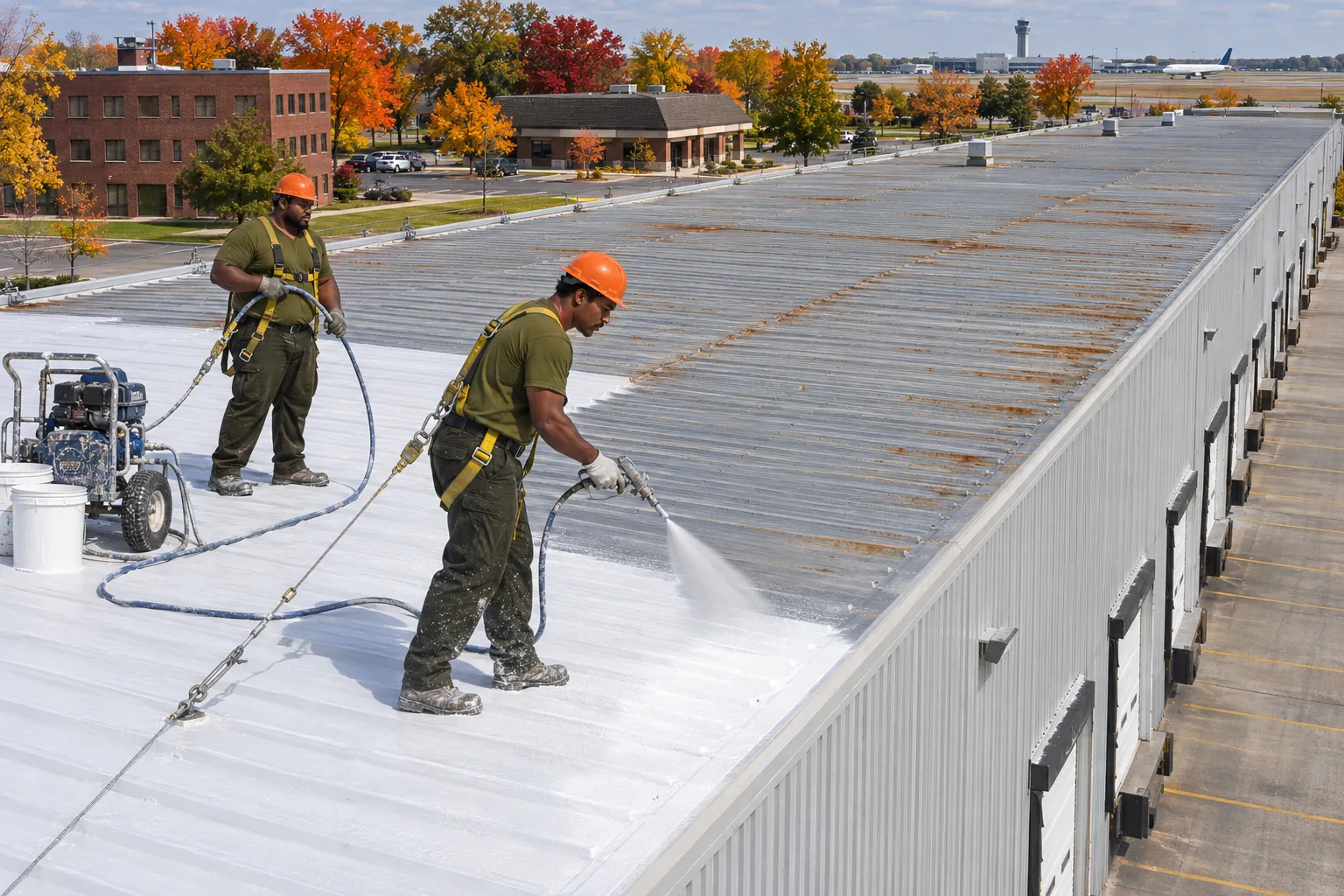
As an Indianapolis metal roof coating contractor, we inspect, repair, and coat commercial metal roofs on warehouses, plants, shops, and downtown blocks.
Indianapolis metal roof coating works when the steel underneath can still carry a coat. Here is how we sort roofs on the first walk.
| Roof Detail | Coat It | Repair First | Replace Instead |
|---|---|---|---|
| Panel rust | Surface bloom and light scale | Pinholes at a few laps | Steel rusted through across wide areas |
| Fasteners | Snug screws with tired washers | Backed-out or stripped screws | Screws pulling out of failed framing |
| Seams and laps | Sealant cracked, laps still closed | Laps opened by panel movement | Buckled panels whose laps no longer meet |
| Water on the roof | Drains off soon after rain | A few low spots near curbs | Sagging bays that hold water |
| Insulation below | Dry when checked from inside | Wet in one bay under a leak | Soaked across much of the building |
Every job follows the same order, and each step has to pass before the next one starts.
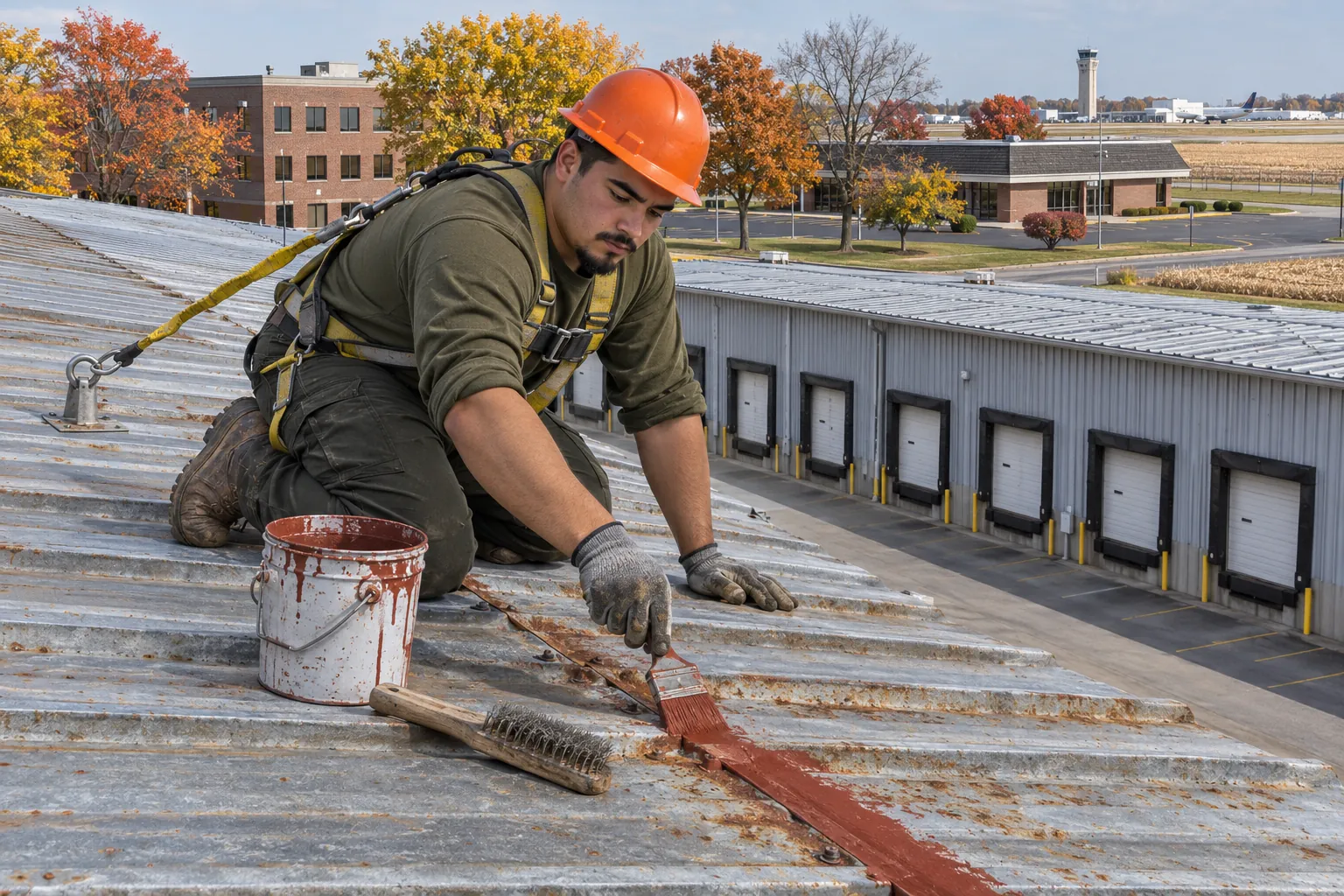
We walk every panel run, test screws by hand, open a few suspect laps, and look at the deck from inside. Photos and notes mark each repair before any price is set.
Pressure washing lifts dirt, chalk, and loose paint. Scraped spots get a rust-inhibiting primer matched to the coating, so the topcoat grips clean steel instead of flaking oxide.
Stripped screws come out and oversized ones go in. Each fastener head is sealed or capped, and side laps and end laps that have opened get fabric and seam sealer.
Flashing around HVAC curbs, skylights, exhaust fans, and pipe boots is cleaned and built up with seam treatment, because water finds these joints before it finds open panel field.
Base and top coats go on by spray or roller to the film thickness the system calls for. A wet film gauge is used as crews work, and the coats are logged for future recoating.
Five coating services, each matched to a different roof surface found on Indianapolis commercial buildings.
Exposed-fastener and standing-seam panels on warehouses and shops get rust treatment, sealed screws, and reinforced laps before an elastomeric coat goes on.
Commercial Metal Roof Coating in Indianapolis →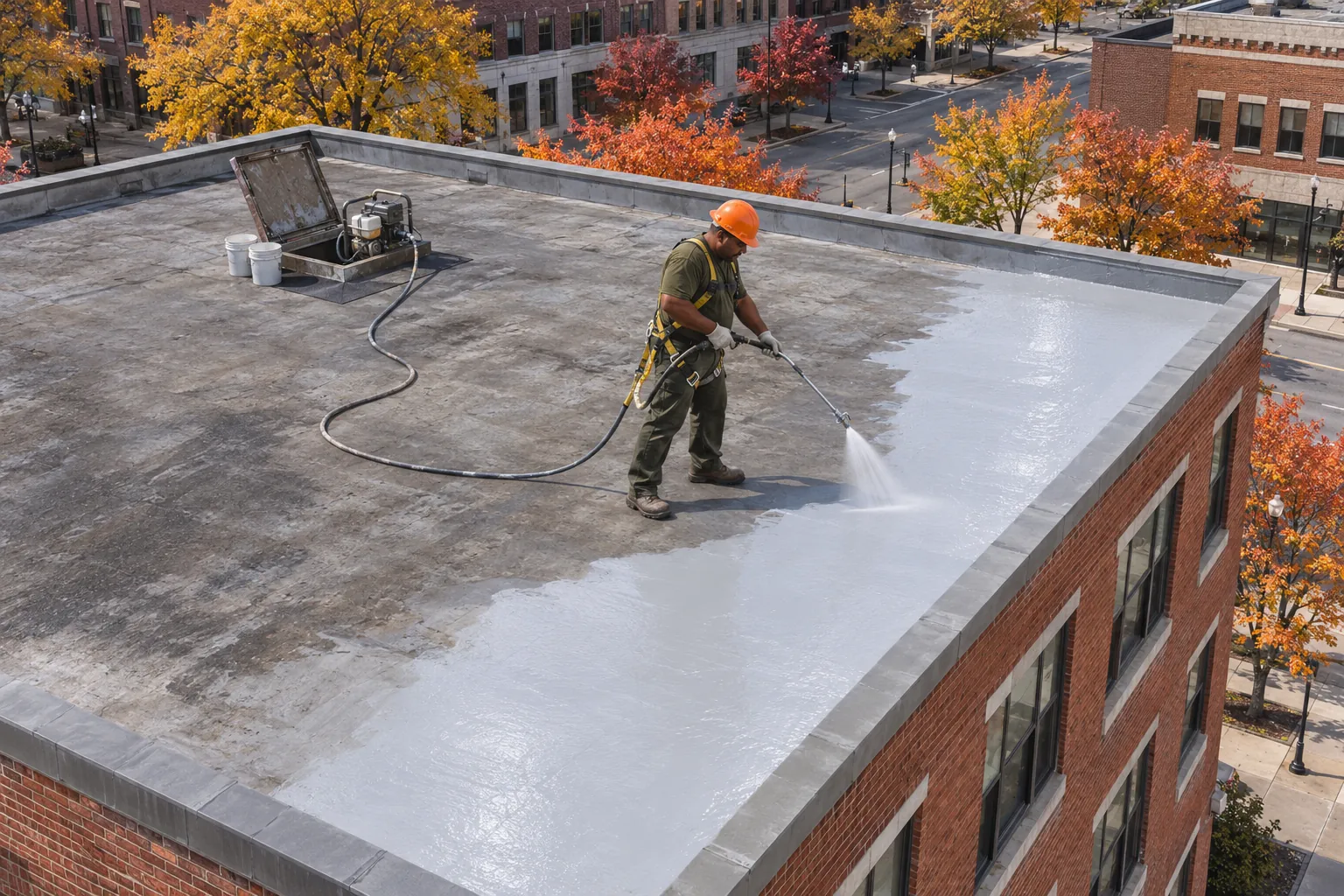
Low-slope metal and older built-up roofs that hold a little water after rain take silicone, sprayed over primer to a measured thickness.
Silicone Roof Coating in Indianapolis →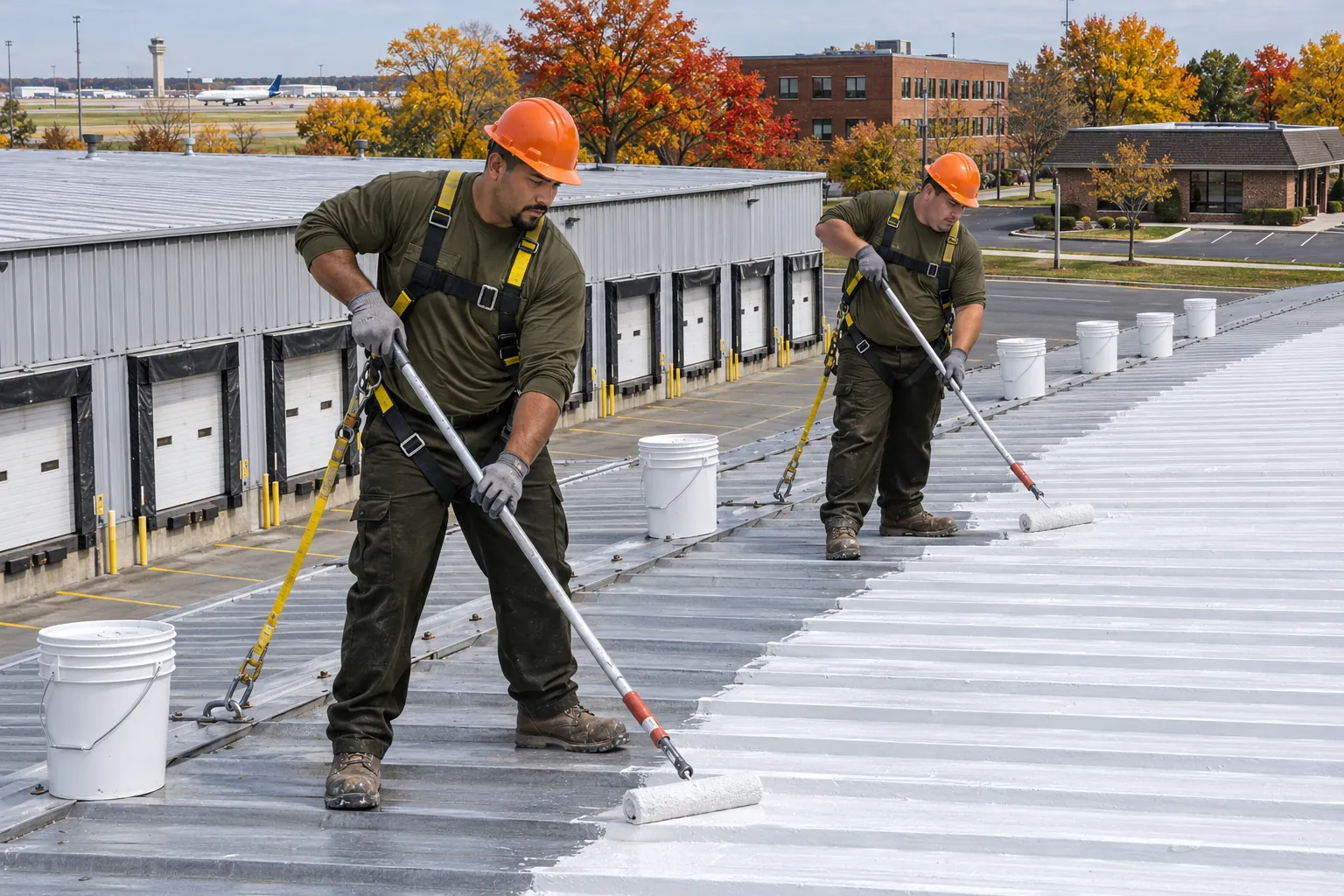
Sloped metal roofs that shed water quickly take acrylic well; it goes on in warm, dry weather and recoats easily with more acrylic.
Acrylic Roof Coating in Indianapolis →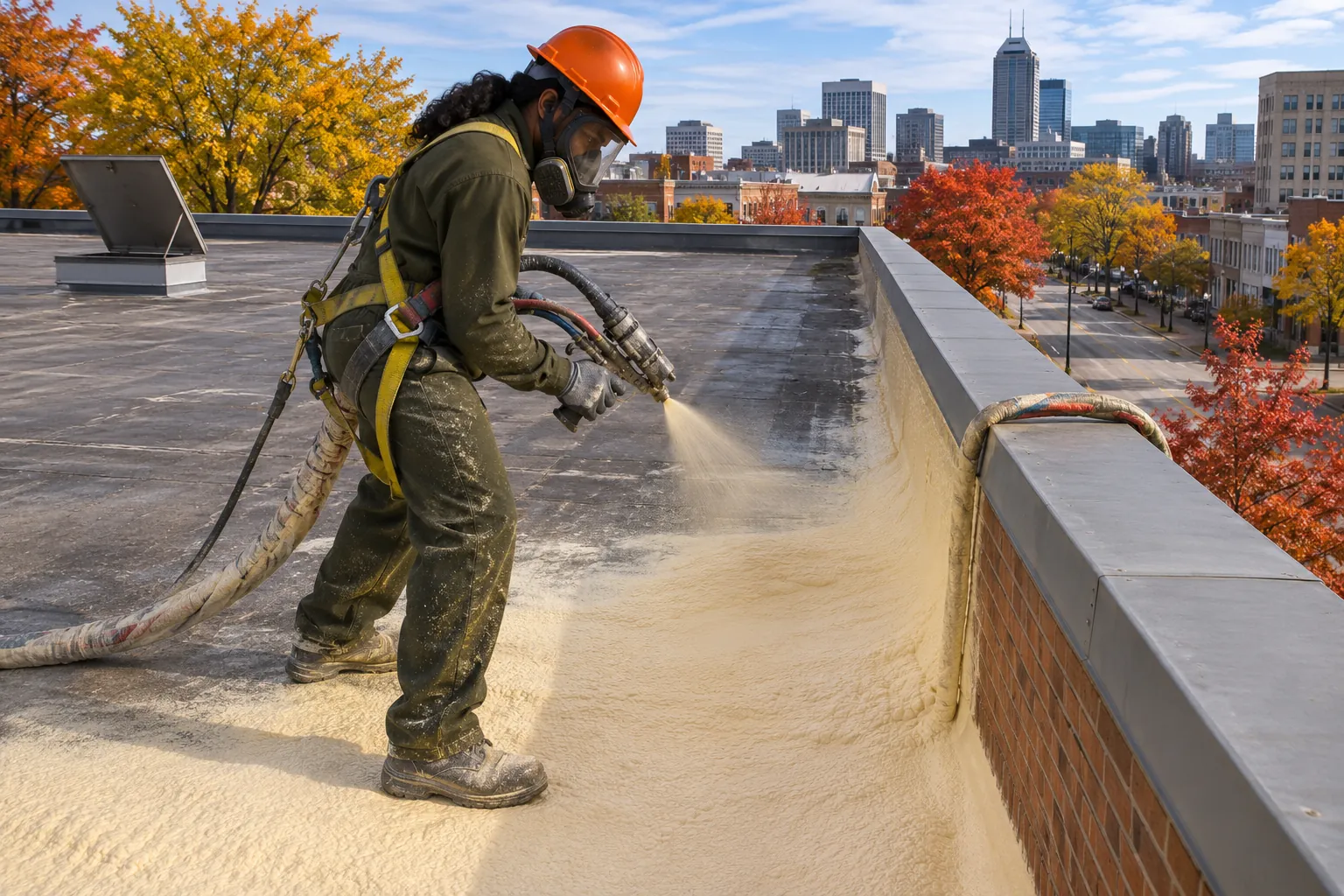
Foam sprayed over flat roofs and metal panels adds insulation and closes every lap in one continuous layer, then gets a protective topcoat.
Spray Foam Roofing in Indianapolis →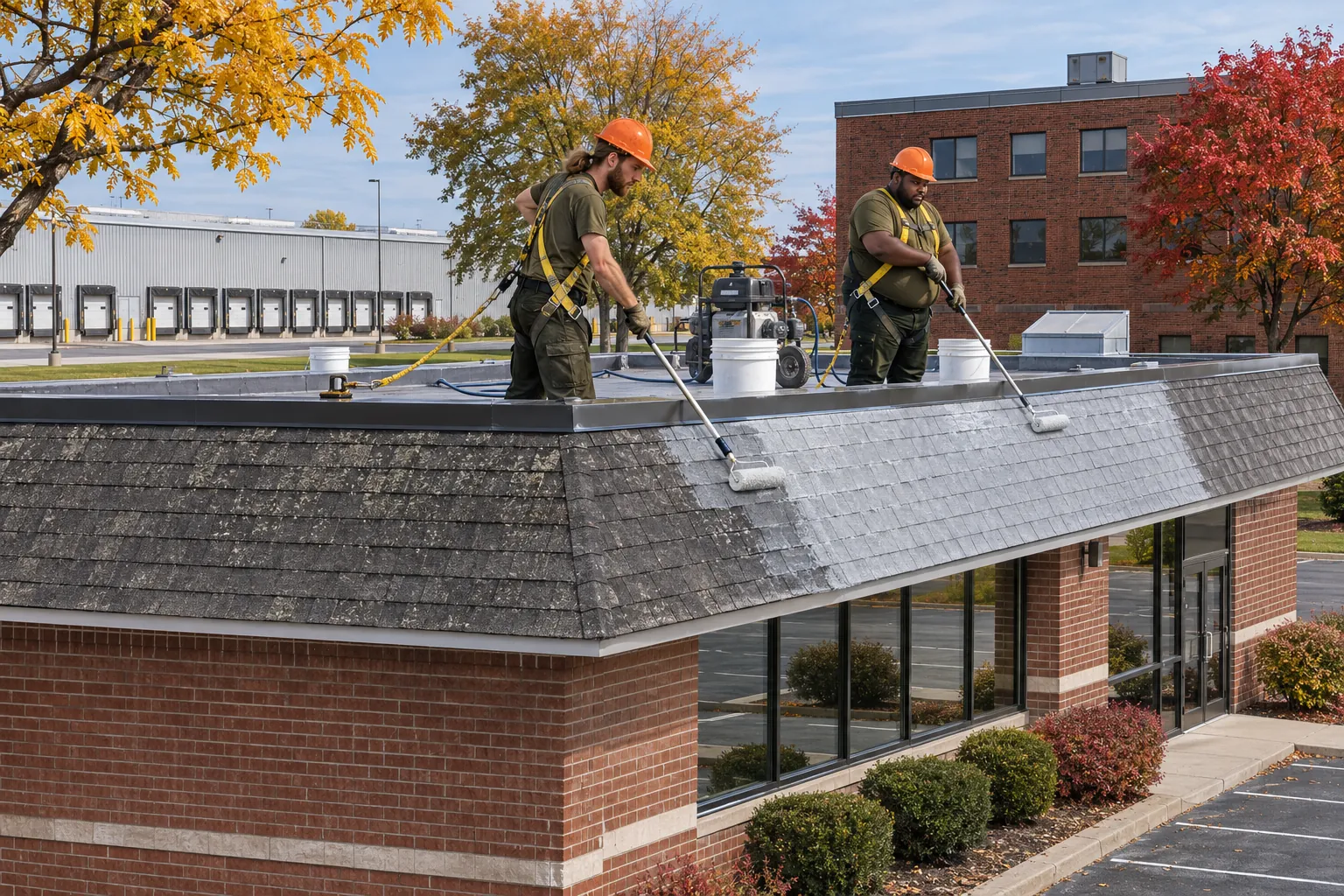
Commercial shingle roofs on churches and small offices can be coated when the shingles still lie flat and the flashing is repaired first.
Shingle Roof Coating in Indianapolis →Leaks along fastener rows and panel laps are often sealed during coating prep. Call us and describe where the water shows up inside.
(317) 930-9376Call UsWarehouse roofs run long and wide, so coating them in place keeps docks and racking in use while the steel overhead gets protected.
A coating goes on over the panels you already have, so nothing is torn off above racking, inventory, or dock doors. Crews work section by section along the roof while trucks keep moving below. Sealed laps and fasteners stop the slow drips that ruin stock near outside walls.
White or light coatings reflect much of the summer sun that a bare or rusted panel absorbs, easing the heat load on the space below.
Primer and coating seal treated steel away from rain and snowmelt, so surface rust stops spreading across the panels.
When the topcoat wears thin years from now, the roof can be cleaned and recoated with the same chemistry in place of a tear-off.
Most metal roof trouble shows up indoors first. Match what you see inside to what we usually find above it.
Water spots on racking or the floor near the eave line after heavy rain.
Open end laps or failed sealant at the eave closure strip.
Brown streaks around ceiling tiles or on the underside of the deck.
Screws with cracked washers letting water track down the shank.
Wet spots that appear during a thaw but stay dry in summer rain.
Ice at gutters and drains backing meltwater under the laps.
Stains under HVAC units, exhaust fans, or make-up air curbs.
Curb flashing pulled away from the panel or split sealant at the corners.
Pinpoints of light visible from the floor on a sunny day.
Rust holes, loose ridge caps, or cracked skylight seals.
We coat commercial metal roofs in Indianapolis and the five towns below.
Outside these towns? Call us or send us a message.
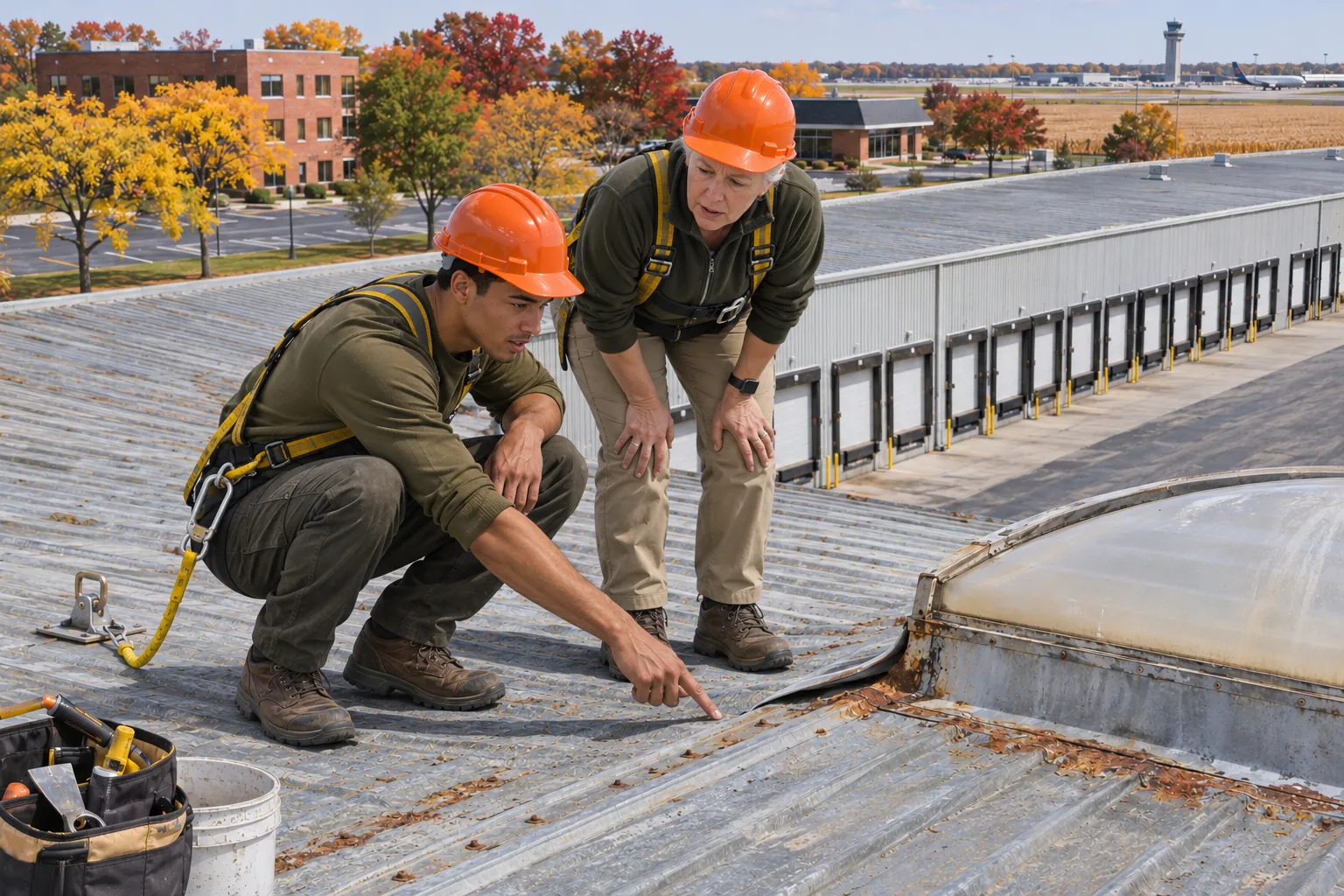
Warehouse, light industrial, and retail strip roofs on the northeast side, coated around active loading docks.
Shops and farm buildings with exposed-fastener panels that need every screw row sealed before coating.
Occupied storefronts and offices coated while staff and customers keep using the building.
Shop and garage roofs on tight lots, with skylights and vents sealed before any coat goes down.
Retail and warehouse roofs on the east side, checked for hail damage before coating.
Our published ballpark runs about $2.50 to $4.00 per square foot to coat, compared with about $5 to $8 to replace. Where your roof lands inside that range comes down to rust depth, how many screws need replacing, the count of curbs and skylights, and how easy the roof is to reach.
Surface rust is the normal starting point for most coating jobs. Loose scale is scraped and washed off, the bare spots are primed, and then the coating goes on. Steel that is rusted through or flexes underfoot gets new panels first, because a coating has nothing solid to hold there.
Service life tracks the dry film thickness, the coating type, and how well the panels were prepared. Roofs that see heavy foot traffic or hold water wear faster. Freeze-thaw swings and July heat both work on the surface, and most systems accept a fresh coat later in place of a tear-off.
Downtown blocks with shared walls and parapets can be coated when the metal is still solid. Lifts, hoses, and material drops are planned around sidewalks and neighbors before work starts, and parapet edges get protection. Roofs where most panels have failed need repair or replacement before any coating.
Permit needs depend on the scope, so the City of Indianapolis building permit office is the place to confirm. Commercial buildings in Indiana fall under the Indiana Building Code, 675 IAC 13. We check what applies to your building while planning the job.
Coating happens on top of the existing panels, so nothing is opened over your floor. We work one section at a time, keep a clear path to rooftop units for service techs, and move staging away from dock doors during shipping hours.
Get a ballpark price for your roof, or call to set up an inspection walk.