
Cold Building in Winter
Inside The Building
Heating units running constantly in the upper space.
On The Roof
Thin or missing insulation under a bare metal or built-up roof.
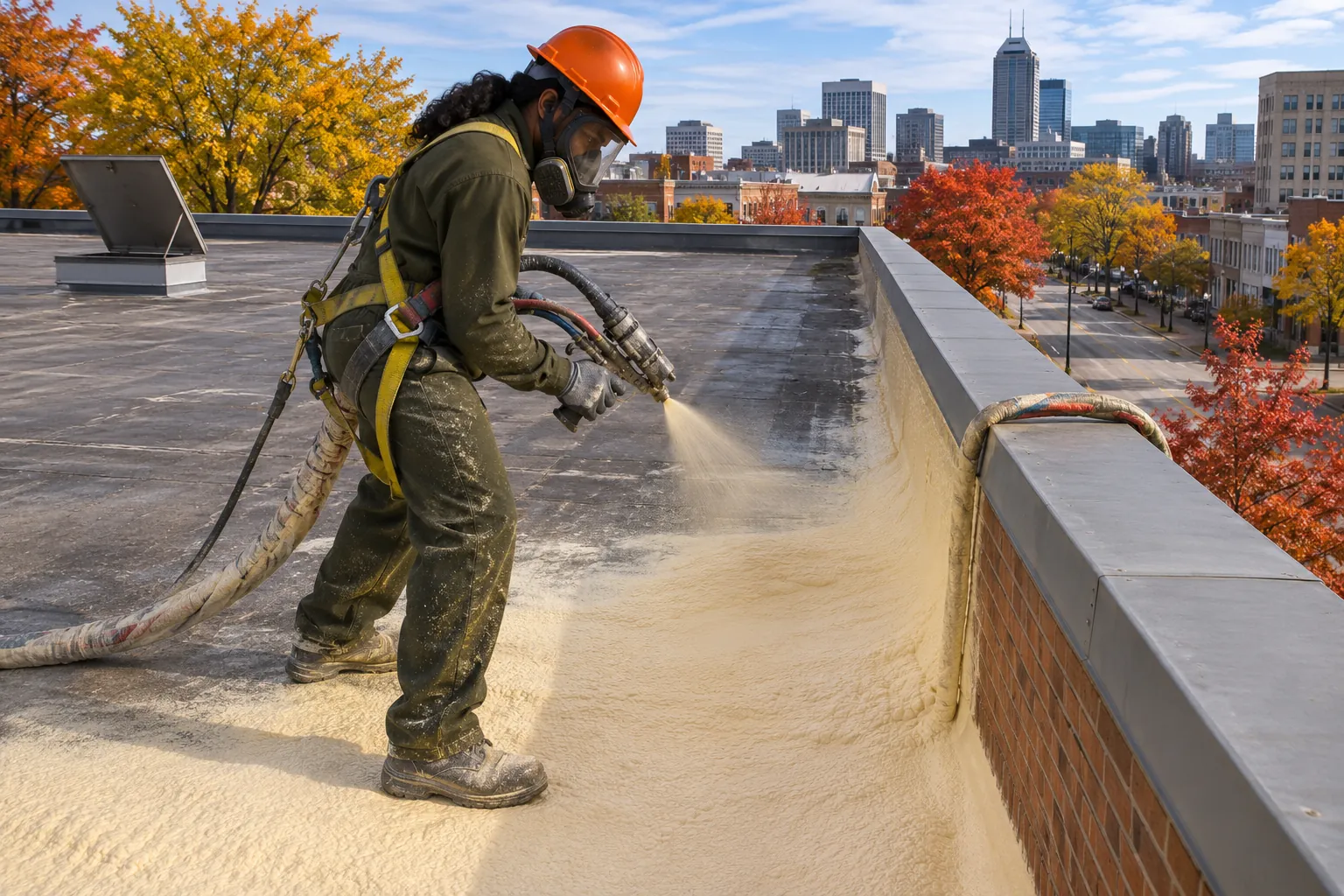
As an Indianapolis spray foam roofing contractor, we spray closed-cell foam over dry flat roofs and metal panels, then seal it with a protective topcoat.
Indianapolis spray foam roofing needs a dry, solid surface and room to control overspray. These checks come first.
| Check | Ready For Foam | Fix First |
|---|---|---|
| Moisture | Dry insulation and deck | Wet areas found by core cuts |
| Surface | Clean metal, built-up, or old foam | Loose gravel or lifting membrane |
| Equipment | Intakes that can be covered | Air handlers that must keep running |
| Neighbors | Space to control overspray | Cars and walls close to the edge |
| Drainage | Water can be tapered to drains | Deck sagging between joists |
Foam is often chosen when a roof leaks at many joints and the building runs cold or hot.
Heating units running constantly in the upper space.
Thin or missing insulation under a bare metal or built-up roof.
Drips scattered across the building instead of one spot.
Dozens of worn laps and fasteners across the whole surface.
Ceiling stains in the middle of wide bays.
Low areas where foam can be built up to move water toward drains.
Little to see yet from inside, which is the reason to look.
Chalky or thin coating with tan foam showing through.
New drips after a spring storm.
Topcoat cracked by hail, leaving foam open to sunlight and water.
Foam is sprayed over several kinds of roofs, and each one gets the topcoat that suits its drainage.
| Foam System | Where It Fits | Topcoat |
|---|---|---|
| Foam over metal panels | Exposed-fastener roofs with many leaks | Silicone or acrylic |
| Foam over built-up roofing | Dry, firmly attached old roofs | Silicone |
| Tapered foam build-up | Flat roofs with ponding | Silicone |
| Foam roof recoat | Existing foam with worn topcoat | Matching coating |
| Foam over insulated deck | Flat roofs with dry rigid insulation | Silicone or acrylic |
Foam adds insulation and a single continuous roof surface in one system.
Foam stays in service as long as its coating is kept intact. When the topcoat chalks or thins, we clean it, repair damaged foam, and apply a fresh coat, renewing the roof while the foam underneath stays put.
Each inch of closed-cell foam adds insulation above the deck without disturbing the ceiling, lights, or sprinkler lines below.
Laps, fasteners, and seams disappear under a continuous foam layer that has no seams of its own to dry out or open.
Extra foam thickness at low spots can slope water toward drains on flat roofs, so ponds clear instead of sitting on the surface.
Foam adds insulation on top of the roof. Call and tell us the roof type and how the building heats.
(317) 930-9376Call UsA foam roof is only as good as the surface under it, so moisture and masking come before the rig runs.
Core cuts and moisture readings confirm the roof is dry all the way down. We also map intakes, nearby cars, and walls so overspray can be controlled before the spray rig arrives.
Any saturated insulation or loose roofing is cut out and replaced with new material. Foam only goes over a dry, firmly attached surface, because trapped moisture pushes foam off the deck.
Rooftop unit intakes are shut down and covered, and screens or tarps protect walls, windows, and vehicles near the work area. Wind is checked before each spraying session.
Closed-cell foam is sprayed in passes to the planned thickness, building up low areas so water moves toward drains. Thickness is probed across the roof as each pass cures.
A silicone or acrylic topcoat goes over the foam promptly, since sunlight breaks down uncoated foam. The topcoat is applied to its own measured thickness.
Foam fits flat roofs and leaking metal panels, while sloped panels and shingle fronts often do better with the coatings below.
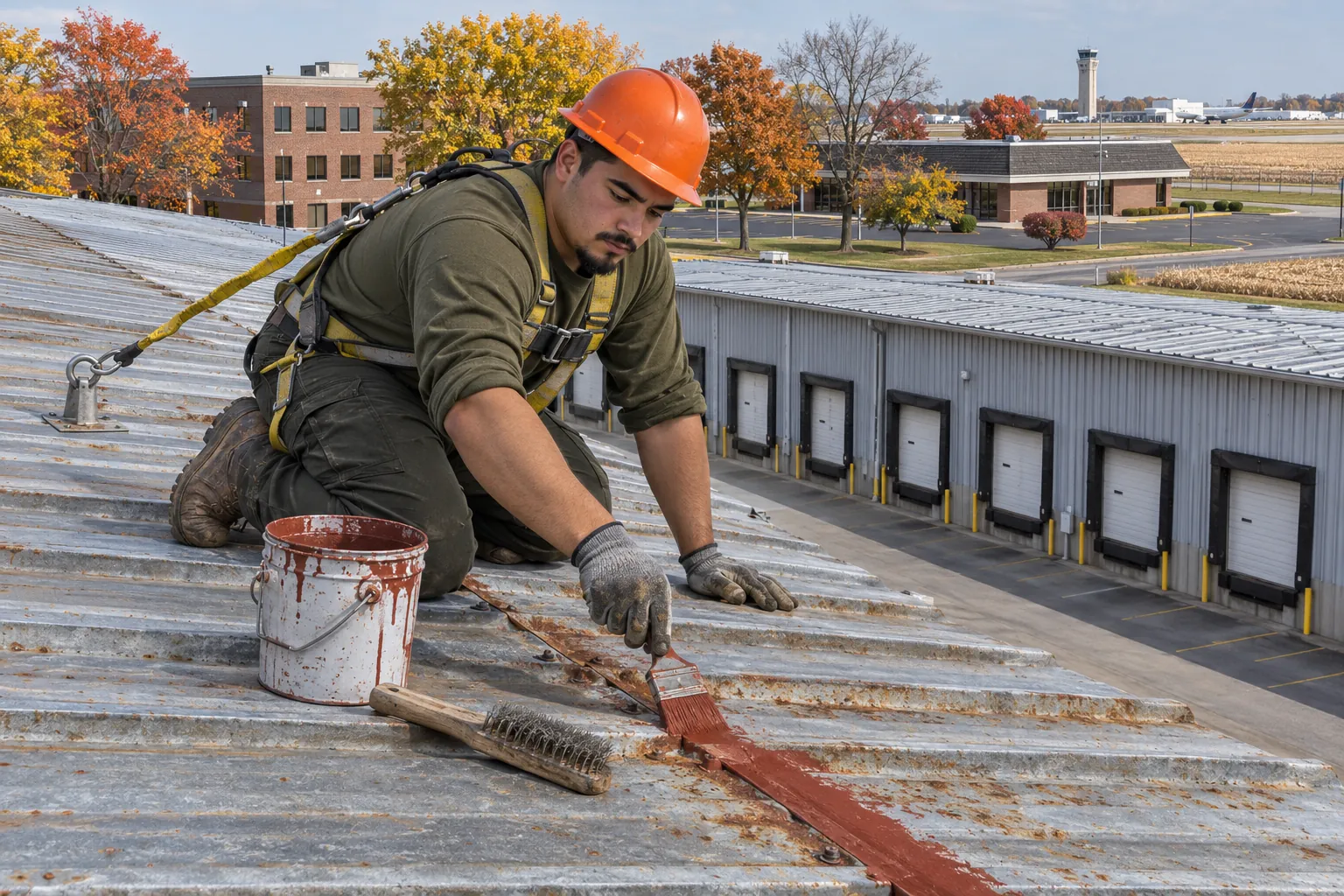
Panels, screws, and laps prepared and coated on steel roofs.
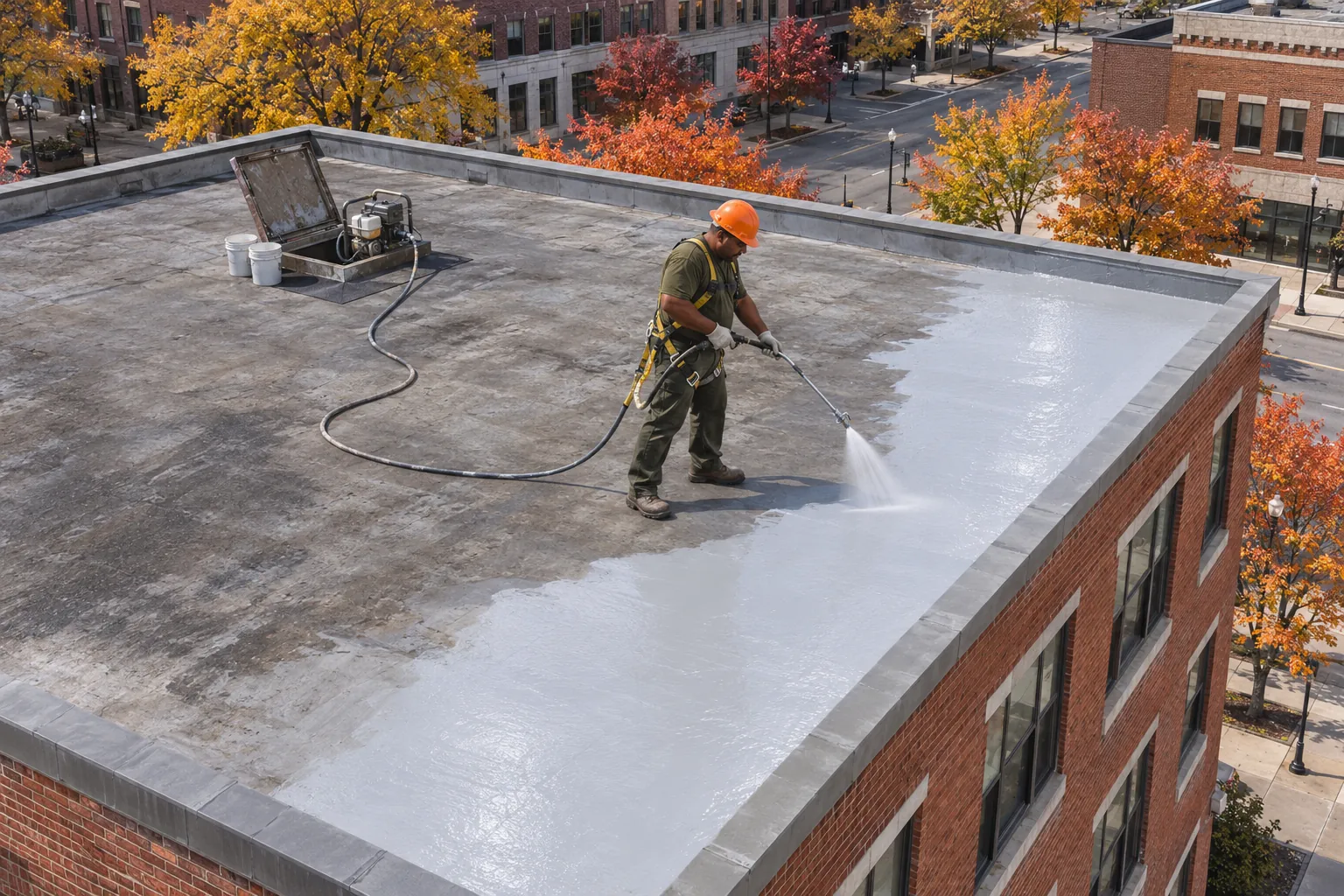
Low-slope areas that hold some water after storms.
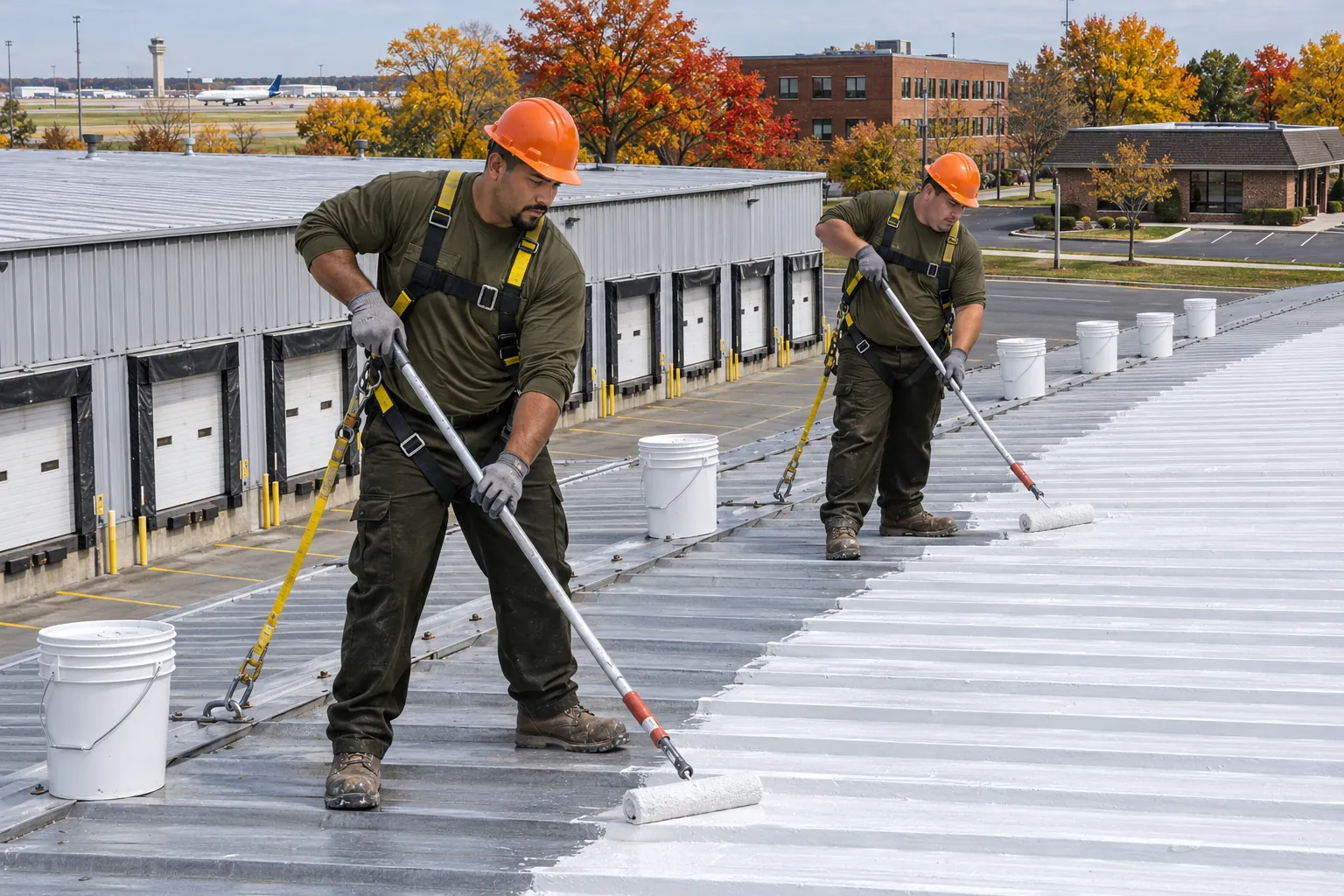
Draining metal slopes coated in warm, dry weather.
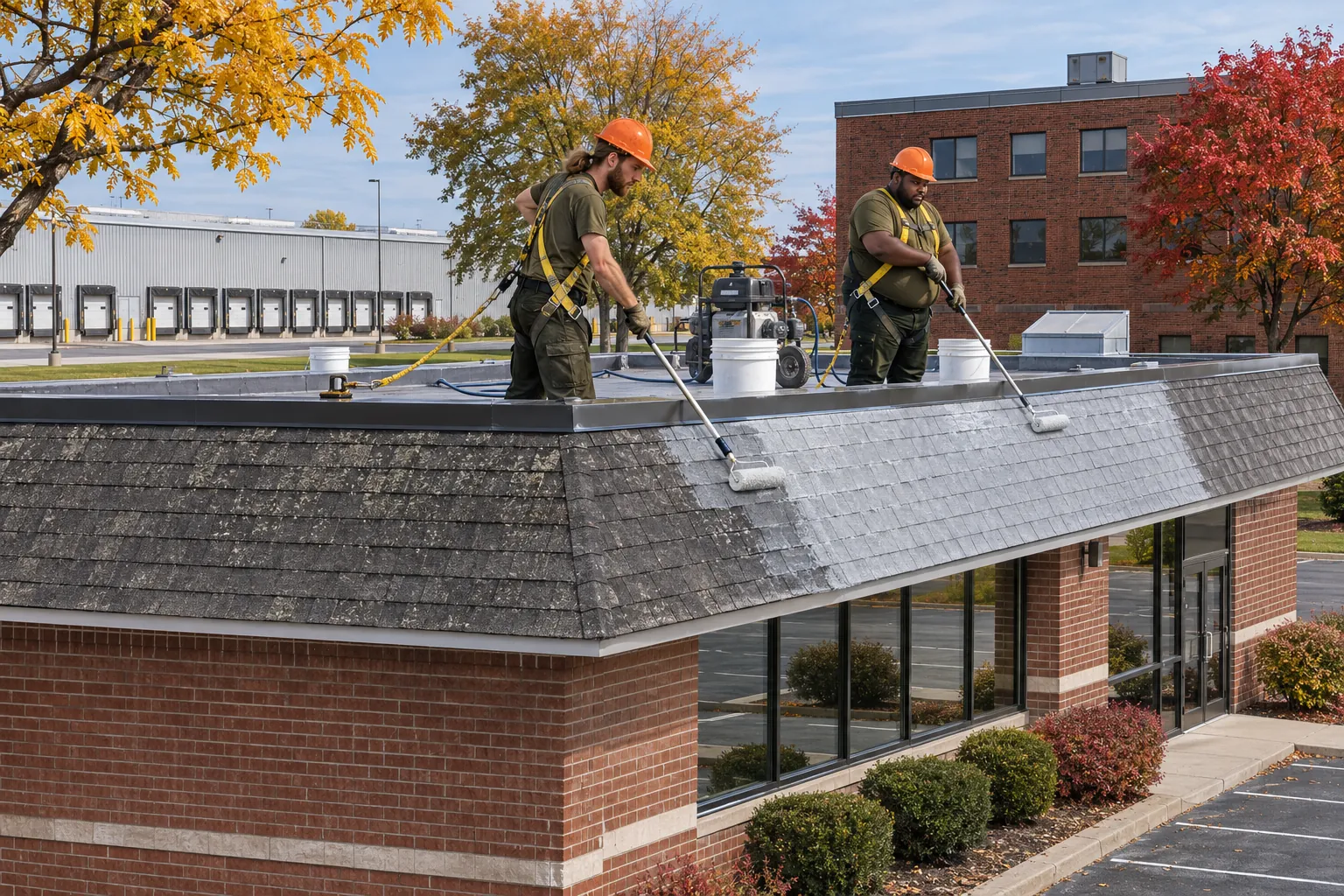
Commercial shingles still lying flat and attached.
Foam is priced after inspection, because thickness drives most of the cost. Our published ballpark runs about $2.50 to $4.00 per square foot for coating and about $5 to $8 for replacement, and a foam job lands according to its thickness, topcoat, roof size, and access.
Seams, laps, and fasteners are where metal roofs leak, and foam covers all of them in one continuous layer. Loose or rusted panels are repaired and wet areas dried before spraying, and the foam is topcoated right away.
Its life follows the foam thickness, the condition of the topcoat, and the upkeep it gets. Damage from foot traffic, hail, or equipment work should be repaired quickly, and periodic recoats keep the foam protected from sunlight.
Old built-up roofs can take foam when the layers are dry and firmly attached. Core cuts show what is under the surface, loose gravel is removed, and wet sections are replaced before spraying.
Units near the spray area are shut off and their intakes covered so foam mist stays out of the building. We plan those hours with your facility staff and work around occupied areas.
Planned thickness varies by roof. Insulation goals, how much slope is needed to move water to drains, and the condition of the surface underneath set the number, and it is probed during spraying to confirm it.
Metal roofs leaking at dozens of laps and screws are where foam earns its place, since one continuous layer covers every joint at once. The panels still need to be firmly fastened and dry, and badly rusted sheets are replaced before any foam goes down.
Get a ballpark for your roof, or call to have the roof cored and checked for moisture.