Faded, Chalky Panels
Inside The Building
Hot upper floors or a warm warehouse ceiling in July.
On The Roof
Factory paint worn thin and absorbing summer sun.
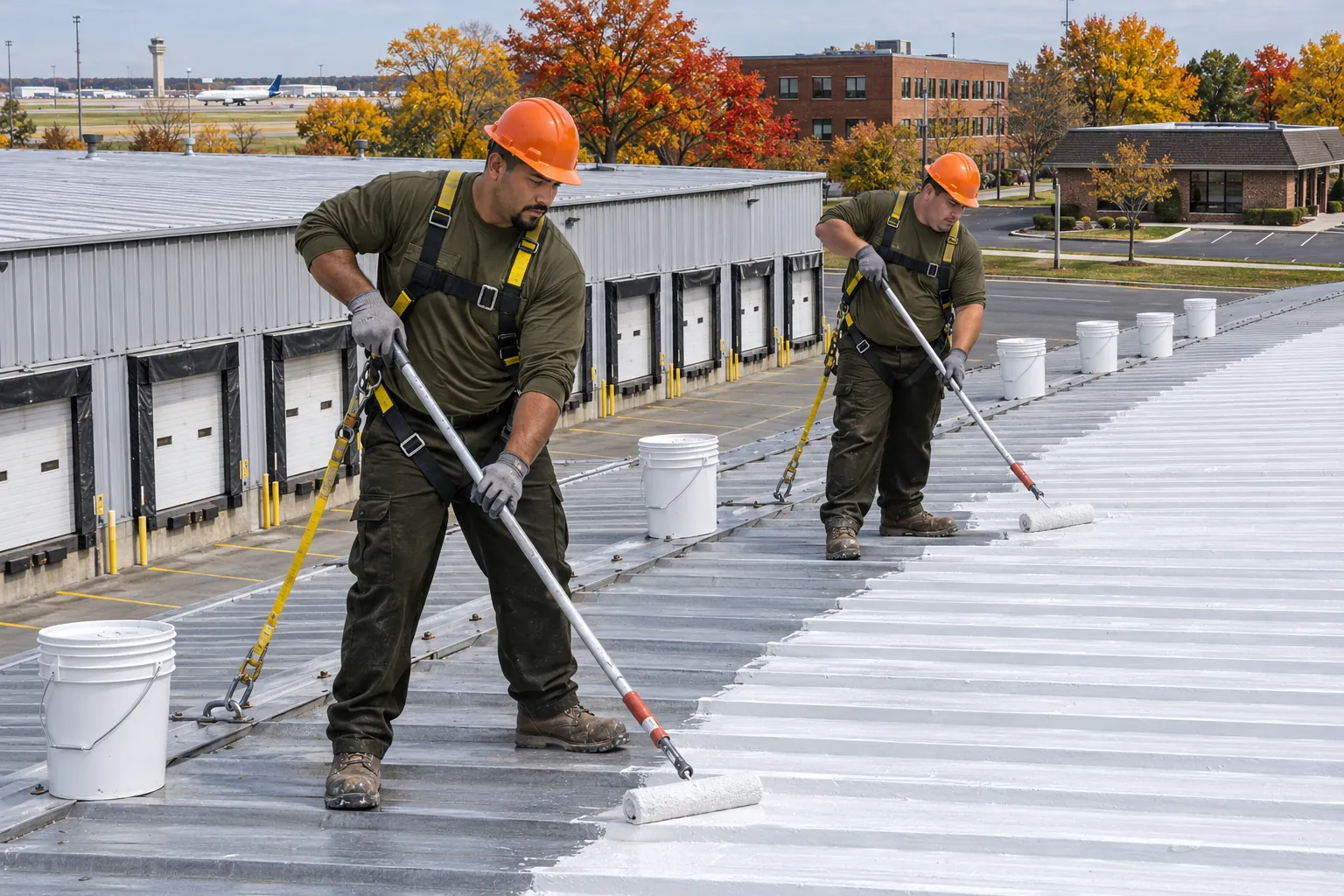
As an Indianapolis acrylic roof coating contractor, we coat sloped metal roofs that shed water fast, scheduling each coat for warm, dry days so it cures properly.
Indianapolis acrylic roof coating fits roofs that drain quickly and can be scheduled around cure weather. Here is how we check that.
| Check | Ready For Acrylic | Look Elsewhere |
|---|---|---|
| Slope | Panels drain within minutes | Low areas that hold water |
| Weather window | Several dry, mild days ahead | Frost or rain before cure |
| Surface | Primed metal or old acrylic | Existing silicone coating |
| Rust | Surface rust, treatable | Holes through the panels |
| Use | Roofs wanting a bright, cool finish | Heavy daily foot traffic |
Sloped metal roofs show wear in a few predictable ways.
Hot upper floors or a warm warehouse ceiling in July.
Factory paint worn thin and absorbing summer sun.
Small rust drips on wall panels under the eaves.
Corrosion forming around fastener heads and washers.
Drips along the center line of the building.
Ridge closures and cap screws loosened by wind.
Wet spots near the low edge of each roof slope.
End laps letting water wick back under the upper panel.
Paint flakes collecting in gutters and at downspouts.
Factory finish letting go of the steel, which needs scraping and primer before acrylic.
Acrylic comes in a few builds, picked by panel texture, lap count, and what is already on the roof.
| Acrylic System | Where It Fits | Build-Up |
|---|---|---|
| Standard elastomeric acrylic | Well-draining metal roofs | Primer plus two coats |
| High-build acrylic | Older panels with rough texture | Thicker coats, fewer passes |
| Acrylic with fabric-reinforced laps | Roofs with many end laps | Fabric embedded at joints |
| Acrylic recoat | Roofs already coated in acrylic | Clean, spot-prime, topcoat |
| Acrylic over spot-repaired panels | Roofs with a few replaced sheets | Prime new and old steel alike |
Acrylic gives sloped metal roofs a bright, flexible surface that is simple to renew.
On slopes where rain runs off in minutes, acrylic bonds to primed steel and moves with the panels as they heat and cool. Indianapolis warehouses and shop buildings with pitched metal roofs are where it pays off, especially when owners want a white, cooler surface.
Per gallon, acrylic usually costs less than silicone, which adds up on large warehouse roofs that need two or more coats to reach thickness.
Future coats bond to clean acrylic without special primers or removal of the old film, which keeps later maintenance quick and simple.
Cured acrylic stretches with panel movement through summer heat and winter cold, so it stays attached at laps that open and close every day.
Acrylic needs dry, mild days to cure, so the coating calendar matters. Call to talk through timing for your building.
(317) 930-9376Call UsAcrylic rewards good prep and the right weather, and each step below protects one or the other.
Slopes are checked for low spots, panels for rust-through, and laps for movement. Any area that holds water after rain is flagged for another system before acrylic is quoted for the rest of the roof.
Pressure washing clears dirt and chalk from the panels. Rusted spots and bare steel get primer, which also gives the acrylic a better grip on old factory paint that has weathered for years.
Worn fasteners are replaced, heads are sealed, and fabric goes into end laps, side laps, and curb corners with acrylic sealant, so the joints are closed before the field coats.
Each coat needs dry hours above freezing to cure. We book coat days around rain and overnight lows, and pause the work when the forecast turns instead of risking a coat that washes off.
Two or more acrylic coats go on by spray or roller to reach the specified thickness, with wet film checked across every section and the products logged for future recoats.
Acrylic covers the pitched panels well, and flat additions, foam, and shingle sections on the same building can take the systems below.
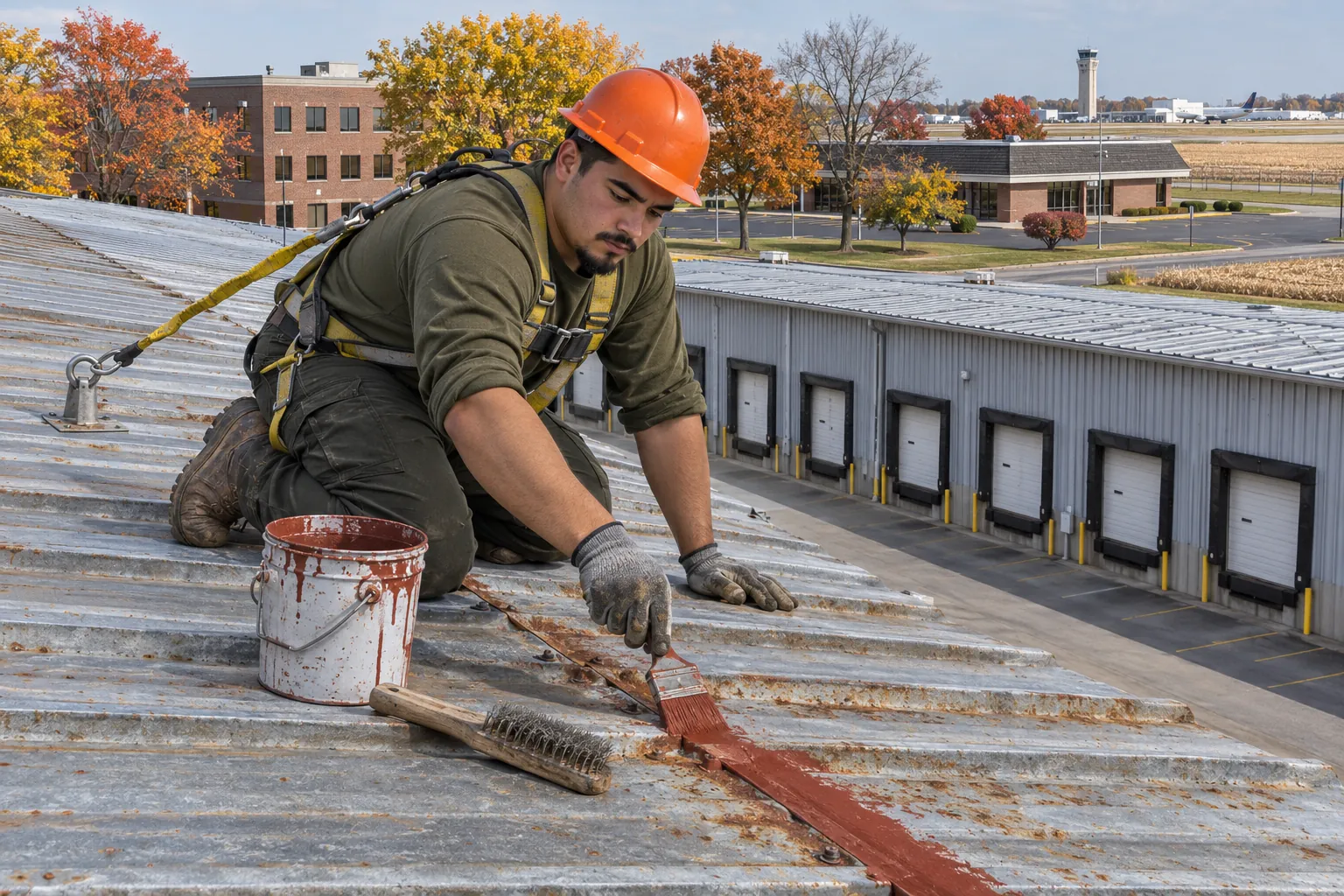
Panels, screws, and laps prepared and coated on steel roofs.
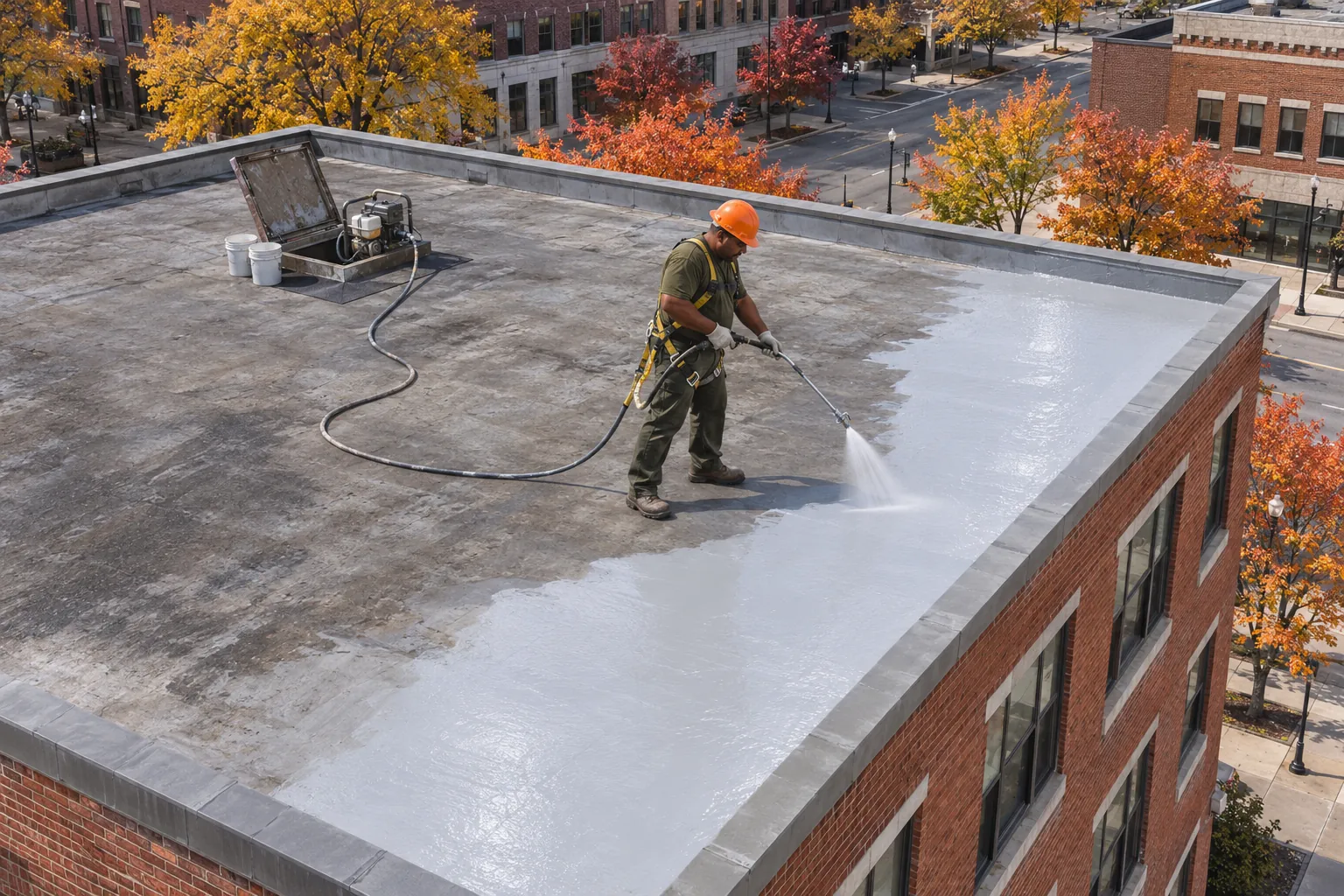
Low-slope areas that hold some water after storms.
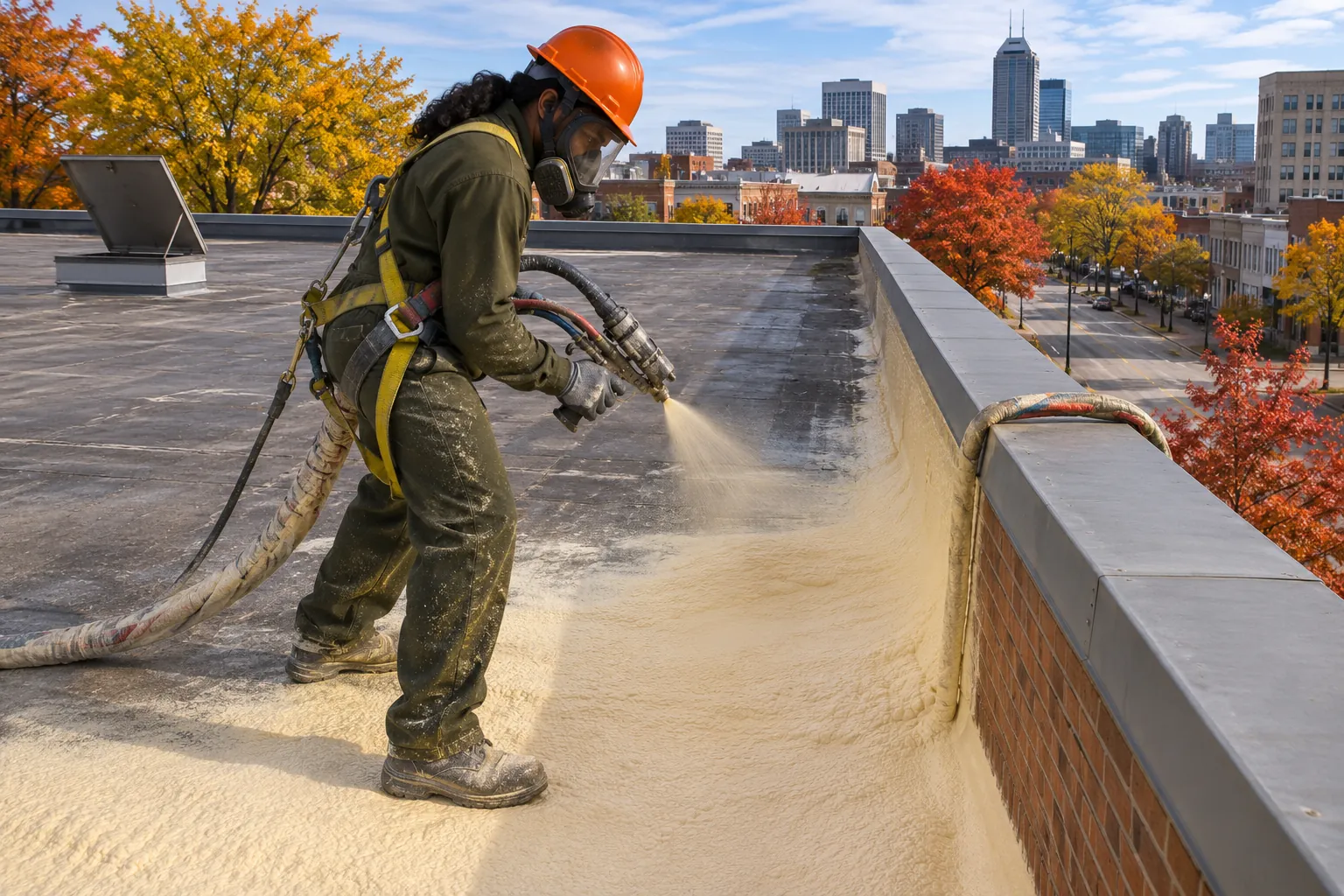
Insulation and one continuous layer over flat roofs.
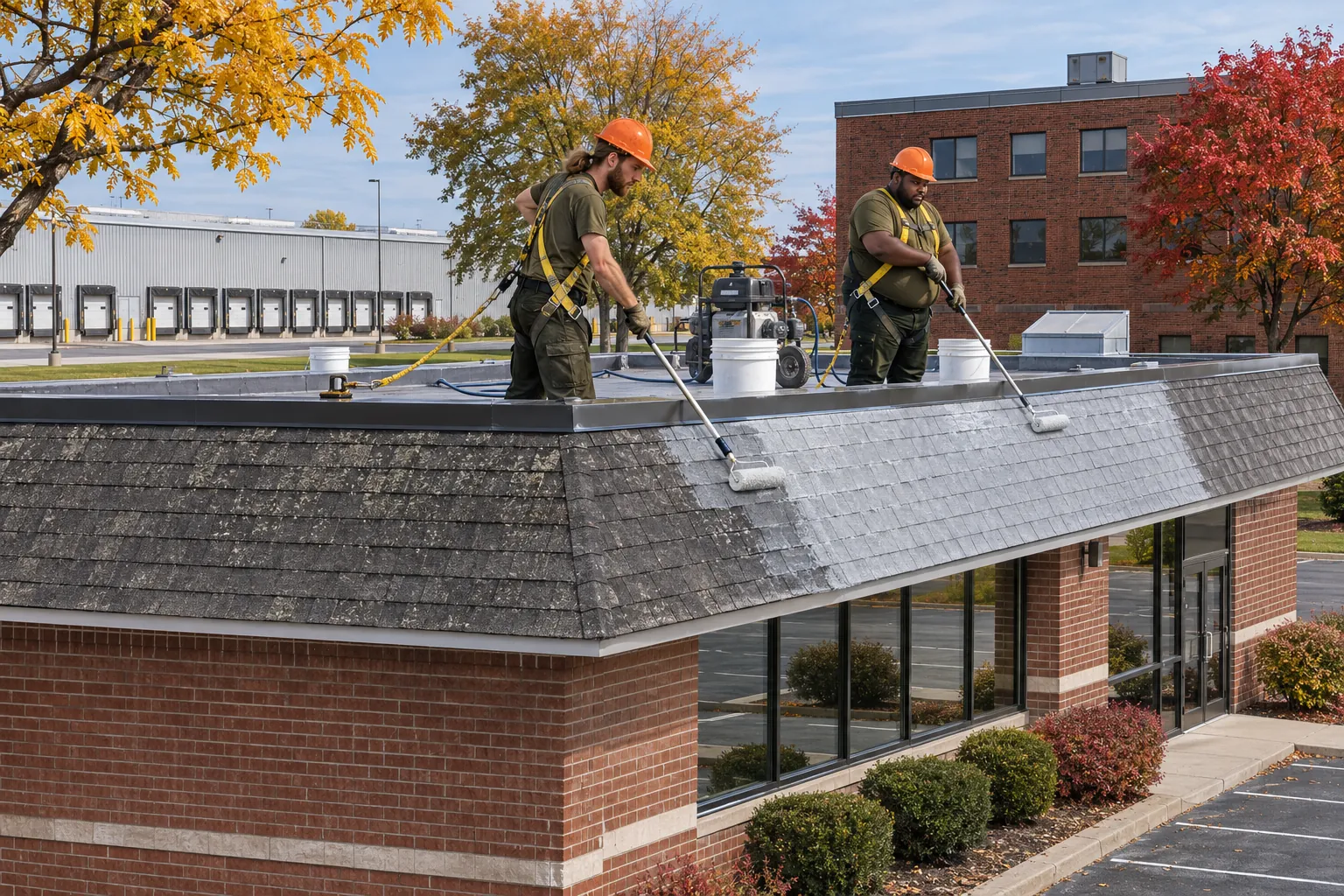
Commercial shingles still lying flat and attached.
Plant roofs coated in acrylic price within our published range of about $2.50 to $4.00 per square foot. Acrylic needs more coats than silicone for the same thickness, which adds labor, and exhaust fans, rust treatment, and scheduling around production shifts also move the price.
Standing water wears acrylic down, so low spots need a different system. Rain or frost before it cures ruins a coat, which shortens the Indianapolis working season. It also takes more coats to reach the thickness silicone gets in fewer.
Life depends on the film thickness, how fast the roof drains, and how much sun and freeze-thaw it takes. Sloped roofs that shed water hold acrylic best. Regular cleaning and a recoat before the film wears thin keep it working.
Sloped metal is where acrylic performs best, since water runs off instead of sitting. It bonds to primed steel, flexes with the panels, and reflects sunlight. Areas that hold water get silicone or another system instead.
Coat days are booked when daytime temperatures stay well above freezing and no rain is due before the coat cures. That usually means late spring through early fall, with prep work like screw replacement able to start earlier.
Silicone-coated roofs take only more silicone, because acrylic fails to bond to it. If your roof already has silicone on it, we recoat with silicone and use acrylic on other sections that fit it.
Most metal roofs get a primer where needed, then a base coat and a top coat of acrylic. Rough or weathered panels sometimes need a third pass to reach the specified dry film thickness, which crews confirm with wet film readings as they go.
Get a ballpark for your sloped metal roof, or call to plan coat days around the weather.