Stains Under Low Spots
Inside The Building
Ceiling marks clustered under one area of the roof.
On The Roof
Water collecting in a shallow dip and working through tired seams.
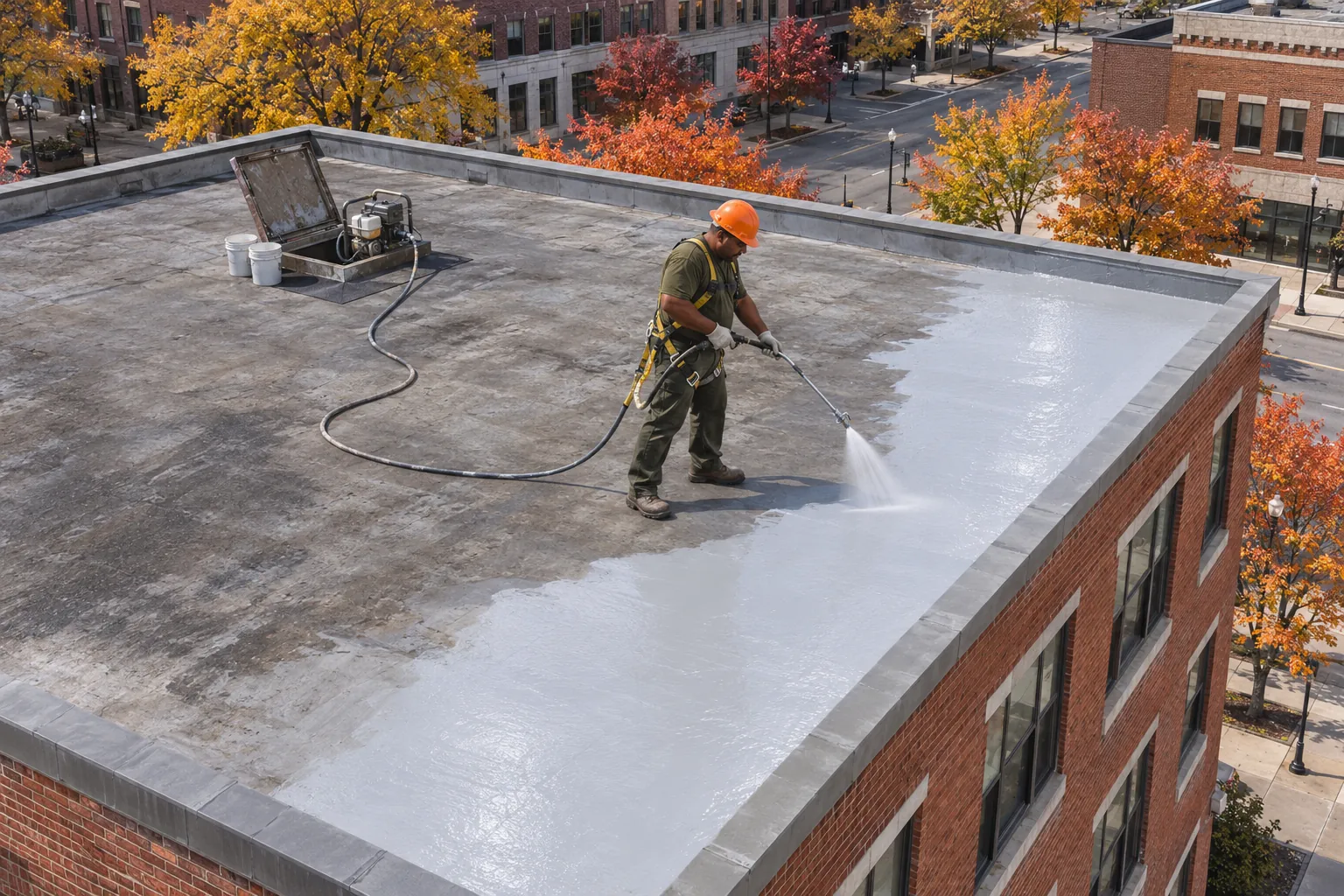
As an Indianapolis silicone roof coating contractor, we prime, reinforce, and spray silicone over low-slope metal and older flat roofs that hold some water after storms.
Indianapolis silicone roof coating works best on roofs with slow drainage and a dry base. This table shows how we sort roofs before spraying.
| Check | Ready For Silicone | Fix First |
|---|---|---|
| Drainage | Shallow water near drains | Deep ponds over sagging deck |
| Base layers | Dry insulation under the surface | Wet insulation found by core cuts |
| Existing coating | Bare metal or older silicone | Peeling acrylic that must come off |
| Seams and curbs | Joints intact, sealant aged | Open seams, loose curb flashing |
| Foot traffic | Occasional service visits | Daily crossings without walkway pads |
Low-slope roofs give clues indoors well before the surface fails.
Ceiling marks clustered under one area of the roof.
Water collecting in a shallow dip and working through tired seams.
Dusty residue blowing into rooftop unit filters.
An old coating breaking down and chalking in the sun.
A damp odor near the top of the walls on hot days.
Moisture trapped in insulation below the roof surface.
Water lines running down interior walls near roof drains.
Drain clamping rings and flashing letting water past.
Soft bumps felt underfoot when walking the roof.
Moisture trapped between layers, which must dry out or be cut away before silicone.
Silicone goes on in a few different builds, chosen by the surface under it and the thickness it needs.
| Silicone System | Where It Fits | Applied How |
|---|---|---|
| Single-coat high-solids silicone | Roofs in good shape with minor wear | One heavy spray pass |
| Two-coat silicone | Older surfaces needing more thickness | Base coat, then top coat |
| Silicone over bleed-blocking primer | Aged asphalt or built-up surfaces | Primer first, then silicone |
| Silicone over metal primer | Low-slope metal panels | Rust primer, seam fabric, silicone |
| Silicone recoat | Roofs already coated in silicone | Clean and topcoat, no primer |
Silicone holds up where water sits briefly, making it a strong match for slow-draining flat sections.
Water sitting for a day after rain or snowmelt leaves cured silicone intact. That makes it the coating we reach for on flat sections with shallow dips around drains and curbs, once core cuts confirm the insulation below is dry.
Sunlight breaks down many roof surfaces, while cured silicone keeps its flexibility through repeated summer exposure and stays elastic as the roof cools at night.
High-solids silicone builds thickness fast, so many roofs reach the specified film in a single pass, which shortens the time crews spend on the roof.
White silicone reflects summer heat away from the roof surface and the rooms below it, easing the load on rooftop units during hot afternoons.
Standing water near drains is a common reason owners ask about silicone. Call and describe how long it stays after rain.
(317) 930-9376Call UsSilicone goes over a dry, clean, primed roof, so most of the work happens before the spray rig starts.
Moisture readings and a few core cuts show whether the insulation under the surface is dry. Drains, curbs, and seams are checked, and any wet areas are marked on a roof plan for removal before coating.
Saturated insulation comes out and is replaced, and broken seams are rebuilt. Silicone goes only over a dry base, since water trapped under the new film blisters it as soon as the sun heats the roof.
The roof is pressure washed and left to dry completely. Primer is chosen by surface, either a bleed-blocker over asphalt or a rust primer over metal panels, and adhesion is tested on a small patch.
Fabric and silicone sealant go into seams, drains, curbs, and penetrations, so the joints that move most carry extra thickness before the field coat goes on.
Silicone is sprayed in one or two coats while crews take wet film readings across the roof. Coat count and product are logged so later recoats use matching silicone.
Silicone suits the flat and slow-draining sections; pitched panels, foam, and shingle roofs on the same property may call for another coating.
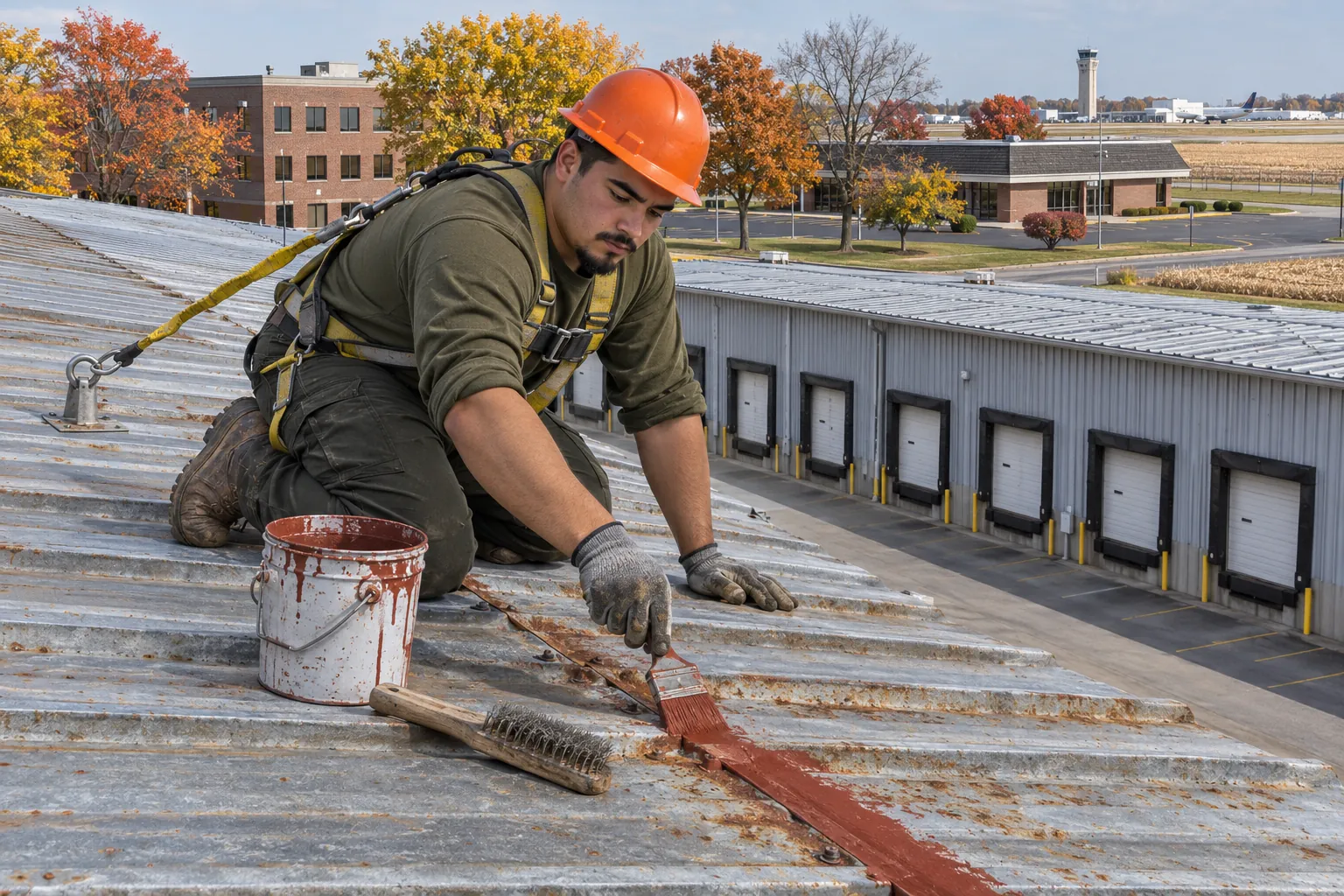
Panels, screws, and laps prepared and coated on steel roofs.
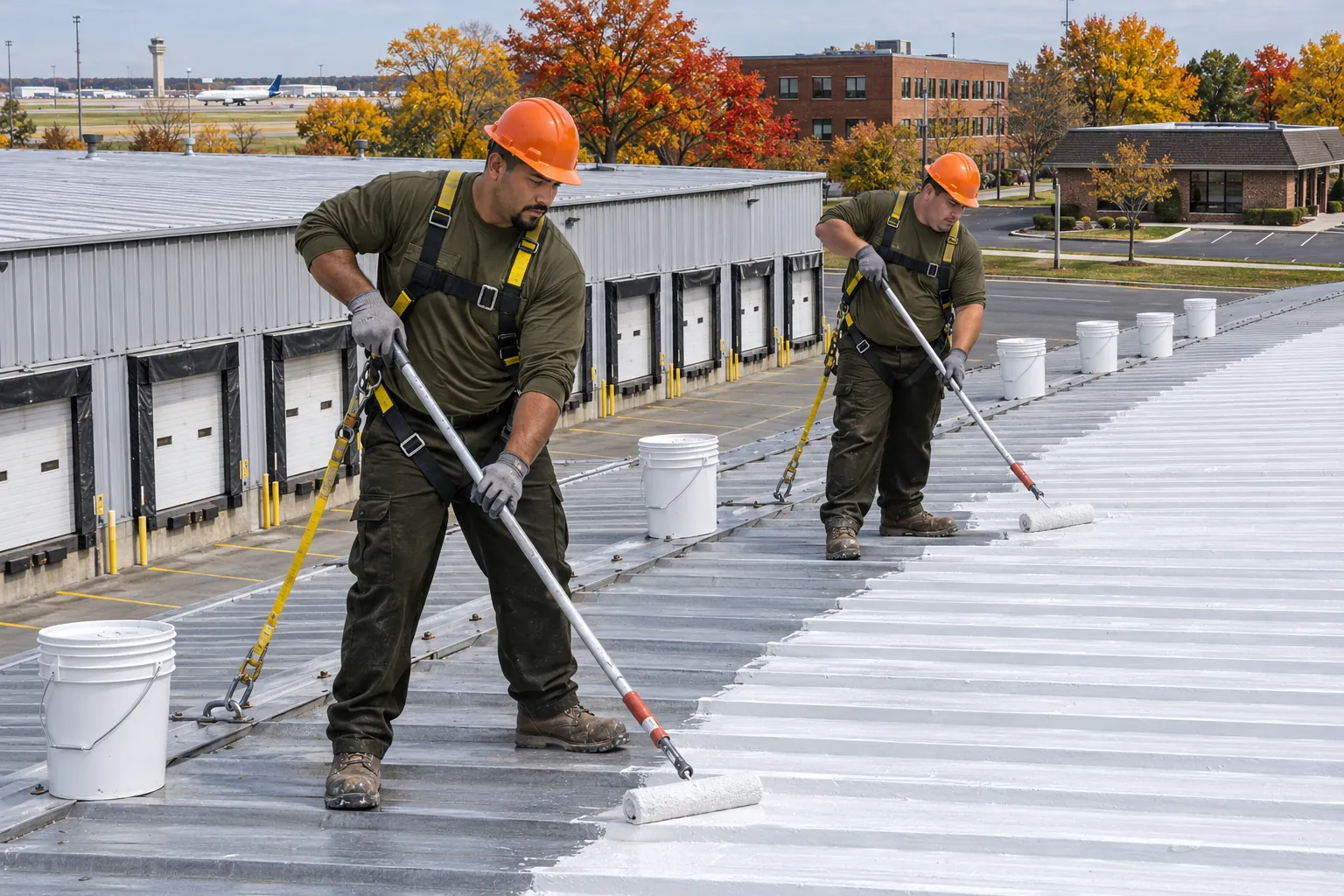
Draining metal slopes coated in warm, dry weather.
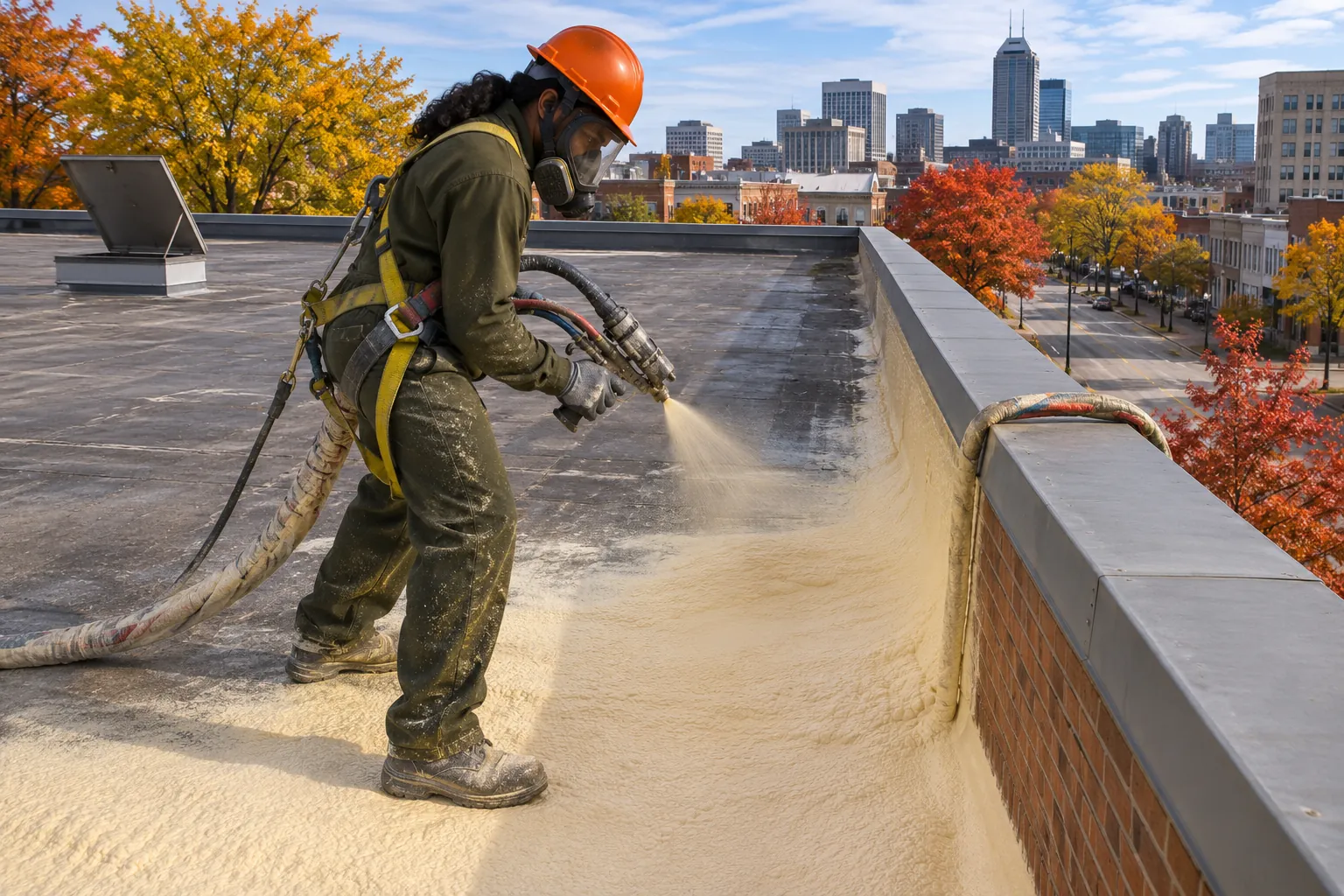
Insulation and one continuous layer over flat roofs.
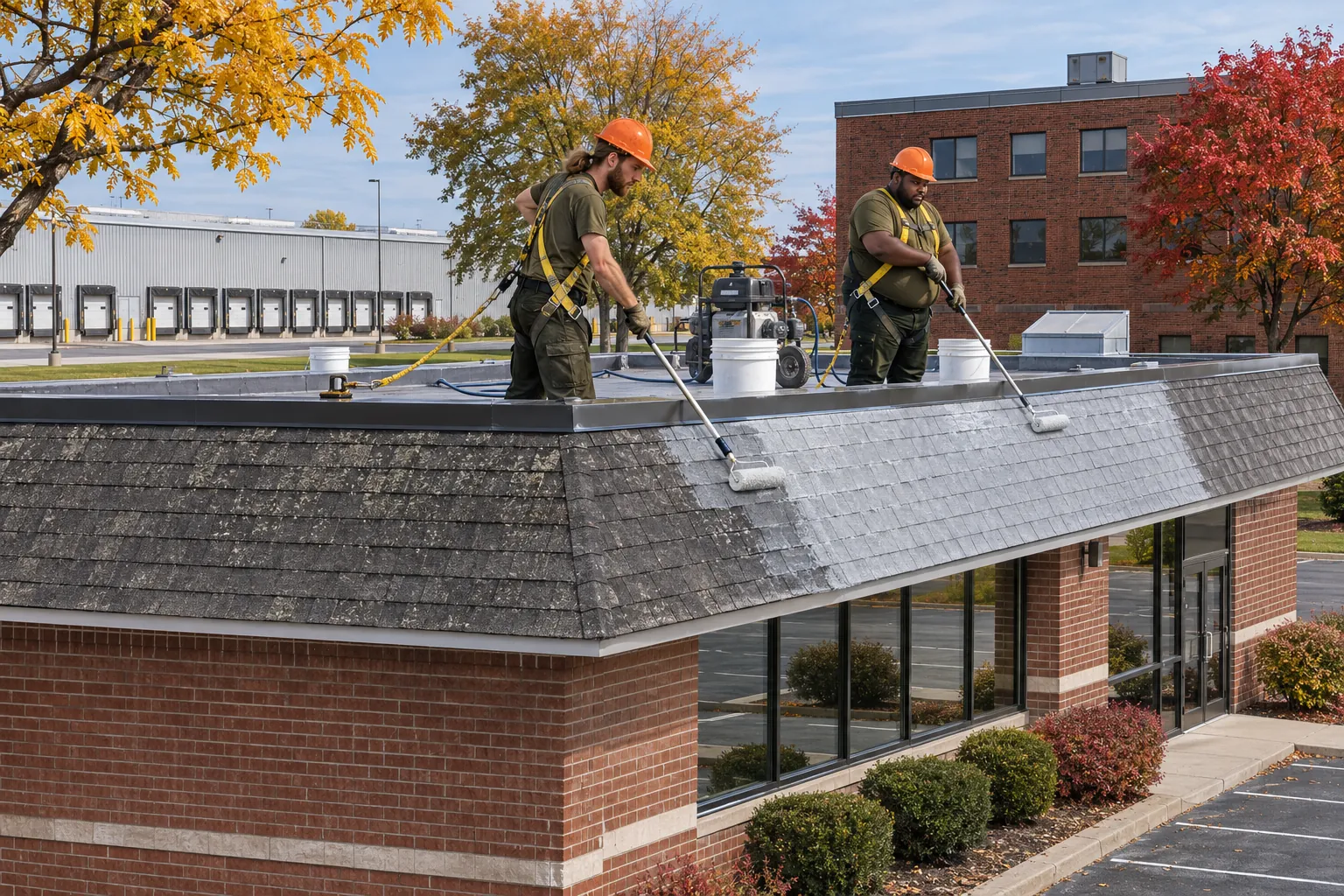
Commercial shingles still lying flat and attached.
Pricing falls inside our published coating range of about $2.50 to $4.00 per square foot and is set after inspection. Primer over metal, seam and fastener reinforcement, the film thickness chosen, and roof access each move the final figure.
Dirt sticks to silicone and dulls its brightness over time. Only silicone bonds well to it, so later recoats stay with silicone. The surface gets slick when wet or frosty, and silicone usually costs more per gallon than acrylic.
Most metal roofs need primer where called for, reinforced seams, then one or two silicone coats. The specified dry film thickness sets the count, and we check wet film as we spray, adding a second pass wherever one coat falls short.
Service life follows the thickness applied, the condition underneath, and how much traffic crosses the roof. Silicone handles ponding and summer sun well. Keeping it clean and repairing damage around rooftop units helps it stay in service longer.
Adhesion tests decide it. A firmly attached acrylic can take silicone over a compatible primer, while peeling or chalky acrylic has to be removed first. We run pull tests on small patches before committing the whole roof to a system.
Wet or frosty silicone is slick underfoot. Walkway pads are added along the routes technicians use to reach rooftop units, and the pads are set into the coating so they stay put through the seasons.
Silicone tolerates cooler temperatures better than acrylic, but the roof still has to be dry and free of frost and dew. Crews check the surface each morning and start spraying only after moisture burns off, which keeps the coat bonding to the primer.
Get a ballpark for your flat or low-slope roof, or call to have the drains and seams checked.