Drips Along Fastener Lines
Inside The Building
Water drops landing in straight rows across the floor or racking.
On The Roof
Washers cracked by sun and cold, letting rain follow the screw shank.
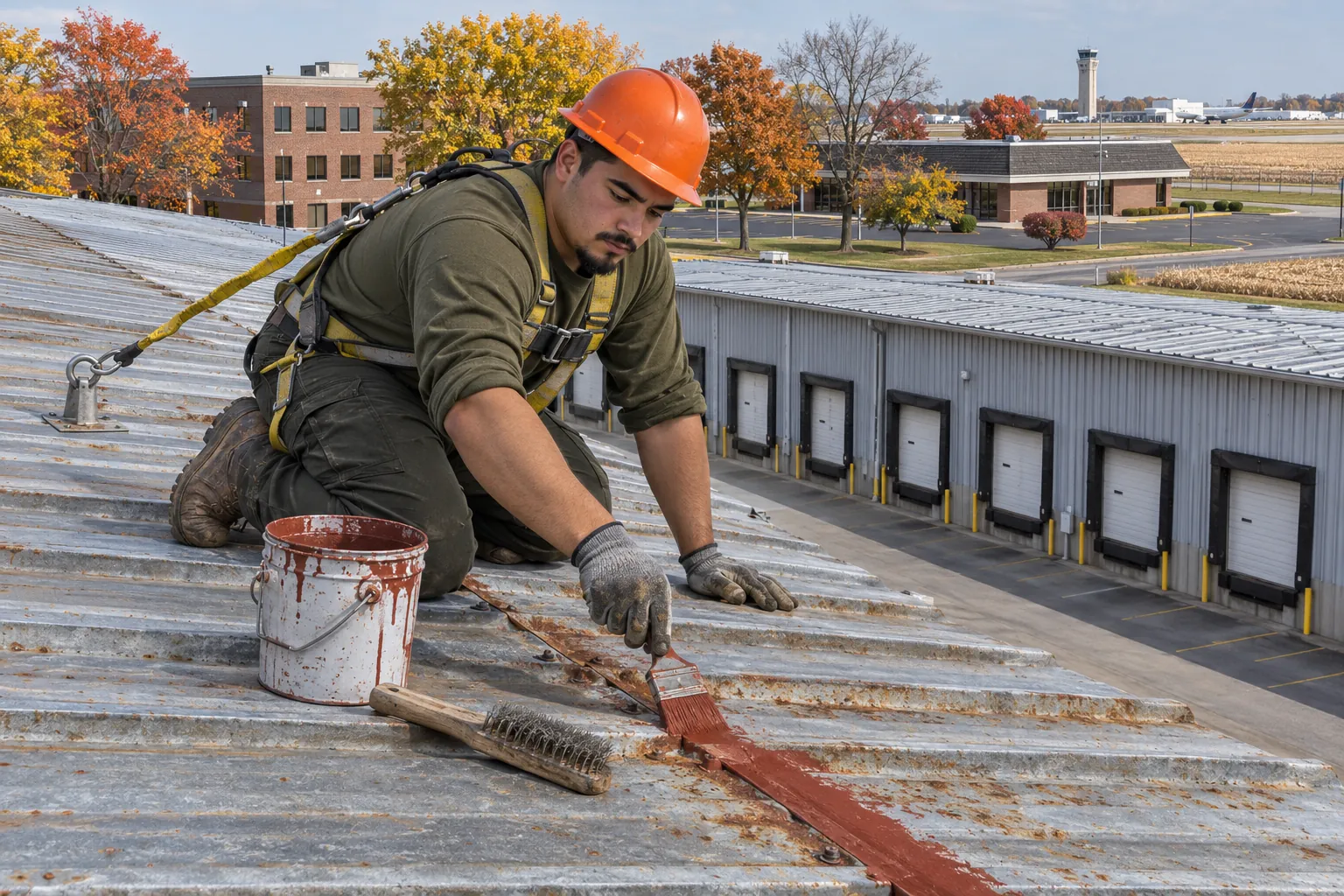
As an Indianapolis commercial metal roof coating contractor, we prime rusted steel, seal every fastener, and coat exposed-fastener and standing-seam roofs on working buildings.
Indianapolis commercial metal roof coating starts with steel that can still hold a coat. These are the checks we run on the first roof walk.
| Check | Ready To Coat | Fix First |
|---|---|---|
| Panel steel | Surface rust, firm underfoot | Rust-through or soft spots |
| Fasteners | Snug screws, worn washers | Stripped or backed-out screws |
| Side and end laps | Closed, with cracked sealant | Opened or buckled laps |
| Roof slope | Water drains off the panels | Sagging bays that hold water |
| Interior | Dry deck and insulation | Wet insulation under old leaks |
Problems on exposed-fastener roofs show up below before anyone climbs a ladder.
Water drops landing in straight rows across the floor or racking.
Washers cracked by sun and cold, letting rain follow the screw shank.
Rusty water marks on wall panels below the roof edge.
Corrosion starting at end laps where water sits longest.
Ceiling tiles staining only when snow on the roof melts.
Meltwater backing up under laps at gutters and roof edges.
Light or drips around skylight wells and exhaust fan housings.
Curb flashing and skylight seals pulled loose by panel movement.
Sagging ceiling deck or insulation hanging loose in one bay.
Panels rusted through near a long-running leak, which need replacement before coating.
Four coating systems go on metal panels. Slope, rust level, and drainage decide which one we recommend.
| System | Best On | Watch For |
|---|---|---|
| Silicone over primer | Low-slope panels with slow drainage | Recoats stay silicone |
| Acrylic elastomeric | Sloped panels that shed water fast | Needs warm, dry cure days |
| Spray foam with topcoat | Panels that need added insulation | Foam must stay coated |
| Rust primer plus topcoat | Light rust on newer panels | Heavy rust needs more prep |
| Coating over replaced panels | Roofs with a few rusted-through sheets | New panels primed to match |
A coated metal roof keeps the panels you paid for and closes the joints where they leak.
Restoration keeps the framing, insulation, and panels in place. We repair the failed parts, prime, and coat over them, so dock doors, offices, and production lines below keep running. Skipping a tear-off also keeps old steel out of dumpsters and the parking lot free for trucks.
Hundreds of screw heads get capped or sealed across a warehouse roof, closing the usual leak path on exposed-fastener panels before the first coat goes down.
Light-colored coatings bounce back sunlight that dark, rusted steel soaks up during Indianapolis summers, so the space under the panels runs cooler.
Once the coating wears thin, it can be cleaned and recoated, keeping the roof in service with the same panels and framing in place of a full replacement.
Leaks that come back with every thaw point to open laps and tired screws. Call and tell us where the water shows up.
(317) 930-9376Call UsFive steps, in this order, on every metal roof we coat.
Each panel run is walked, screws are tested by hand, and suspect laps are opened to see the sealant. Interior stains are traced to the roof above, and every repair is marked and photographed before a price is given.
Loose rust and chalky paint come off with pressure washing and hand scraping. Bare and rusted areas then get a rust-inhibiting primer that matches the coating going on top, and it cures fully before any base coat.
Stripped screws are swapped for oversized ones with new washers, and every head is sealed or capped. Missing closures at ridges and eaves are replaced while crews are working that section, so wind-driven rain has fewer ways in.
Side laps, end laps, and the flashing around HVAC curbs and skylights get fabric and seam sealer. These joints move the most as panels heat and cool through the year, so they carry extra material.
Base and finish coats go on by spray or roller across each section. Wet film readings are taken as crews work, and the coat count and product are recorded so a future recoat matches what is already there.
Metal panels are the starting point, but some Indianapolis buildings carry flat additions or shingle fronts that need a different system.
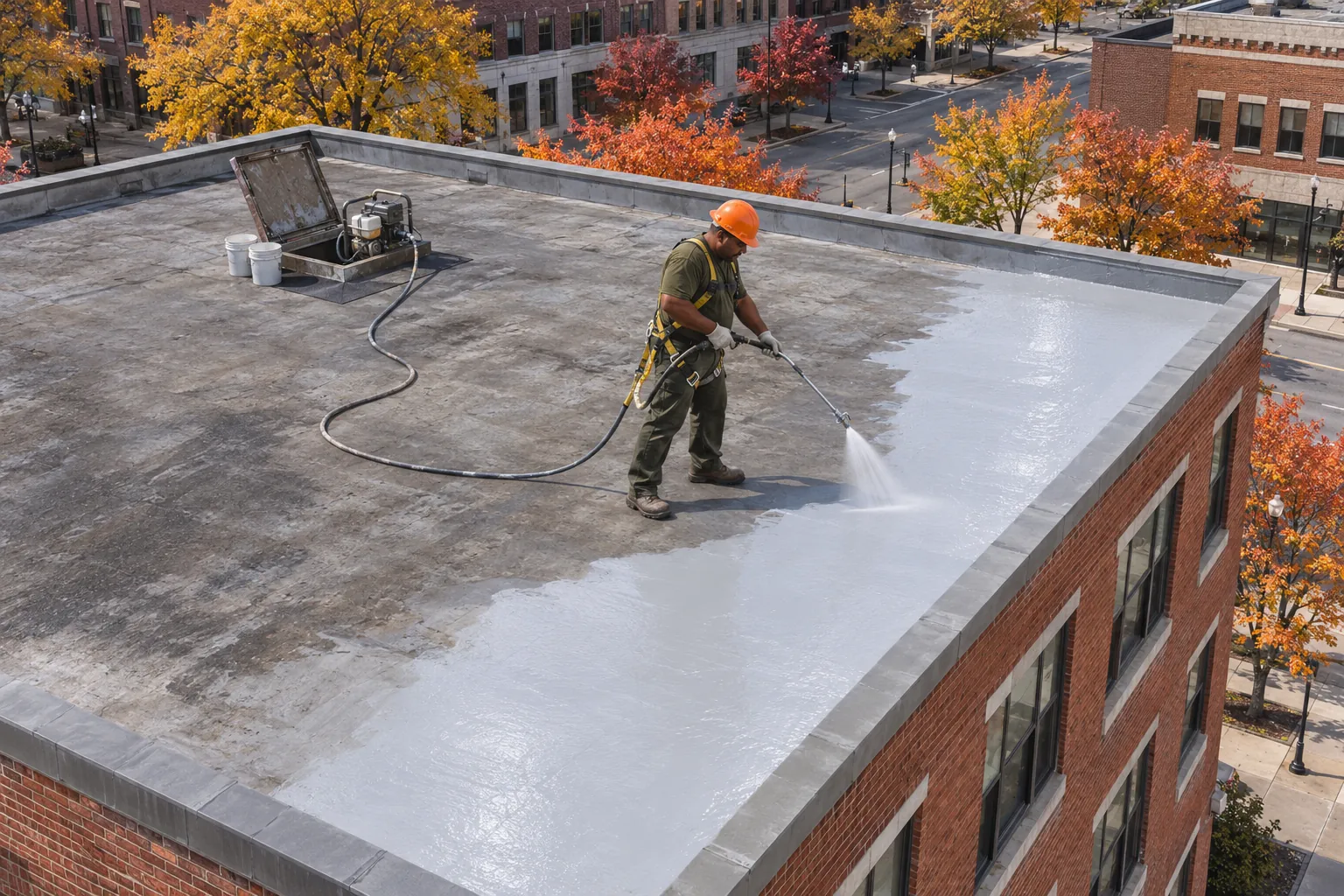
Low-slope areas that hold some water after storms.
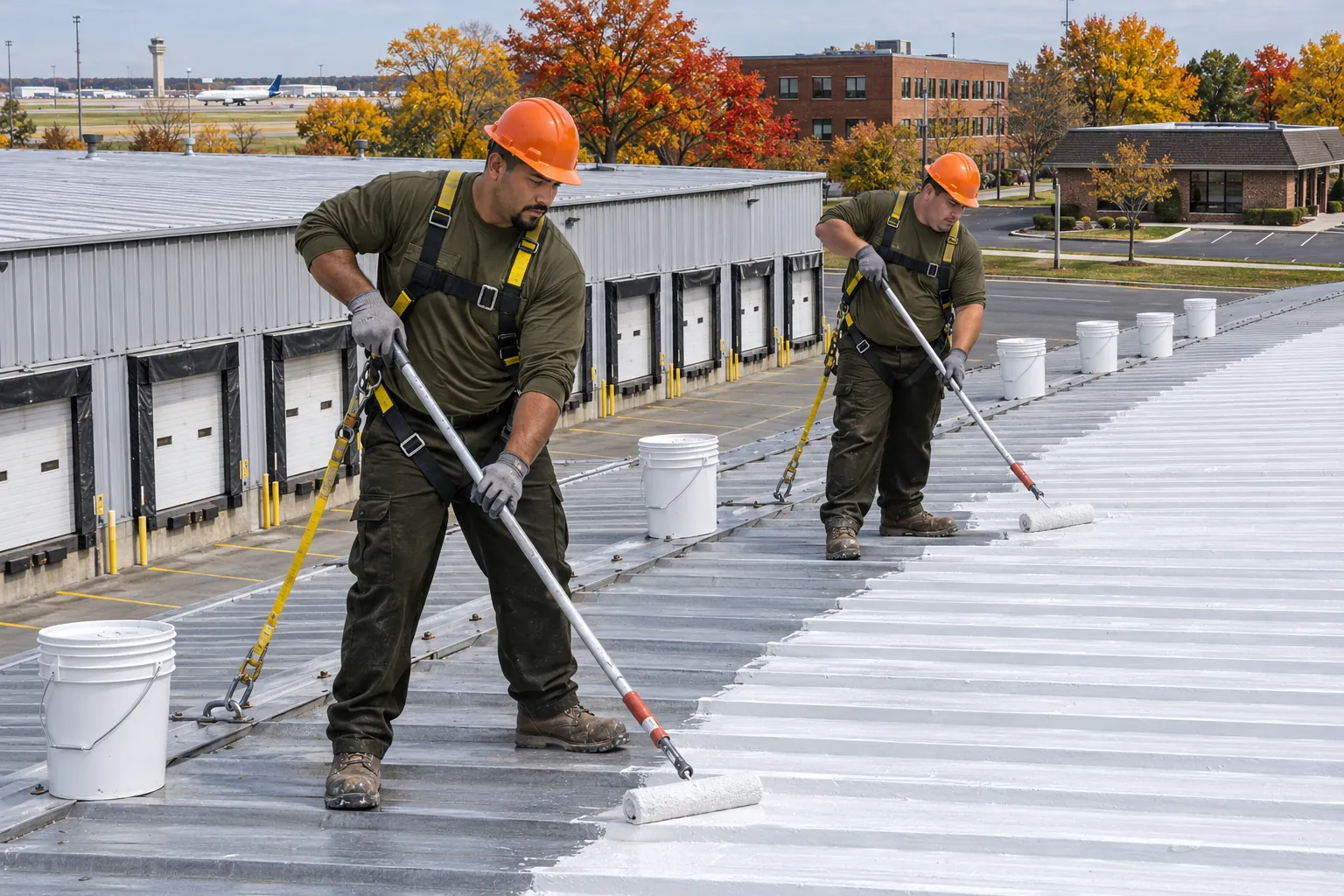
Draining metal slopes coated in warm, dry weather.
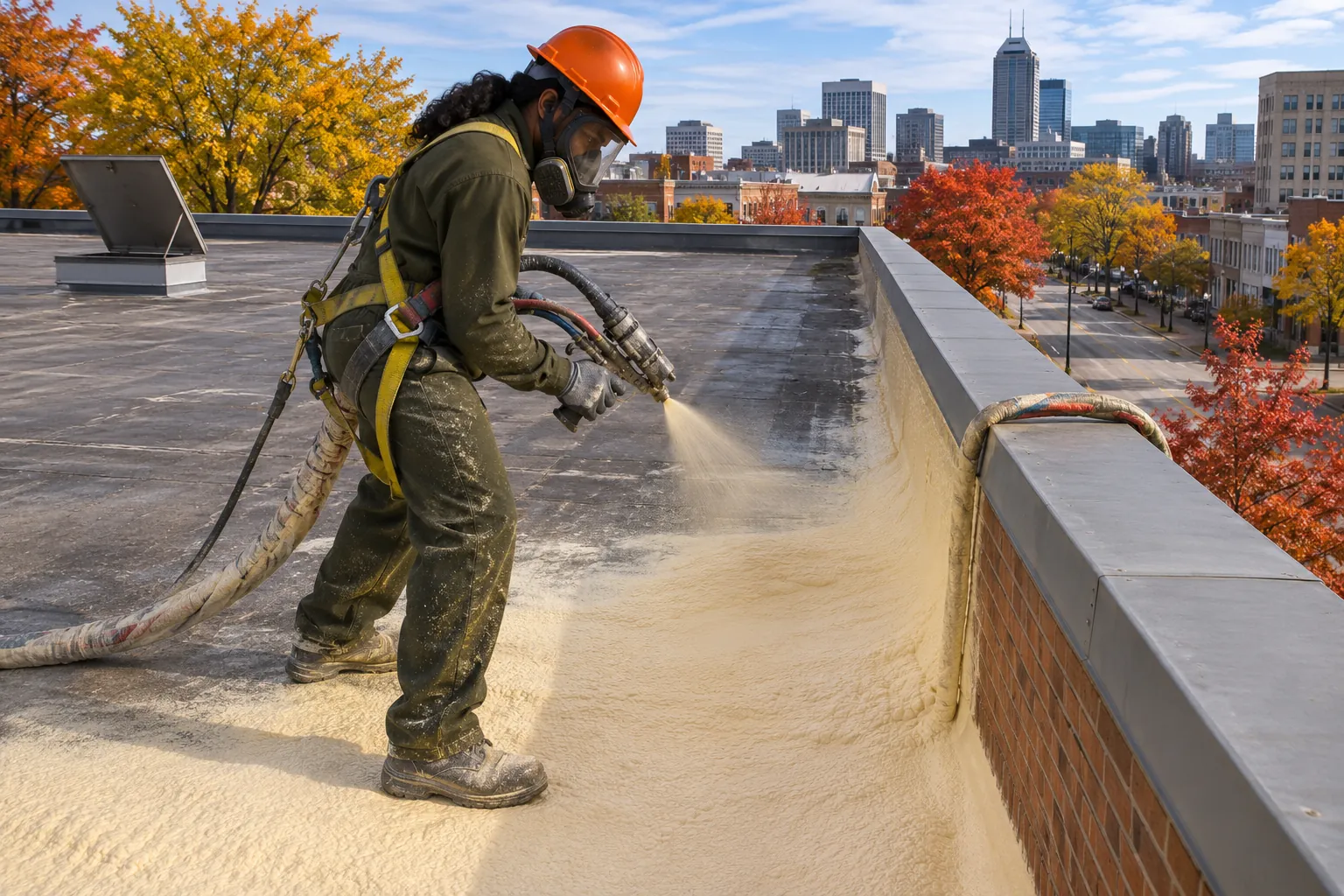
Insulation and one continuous layer over flat roofs.
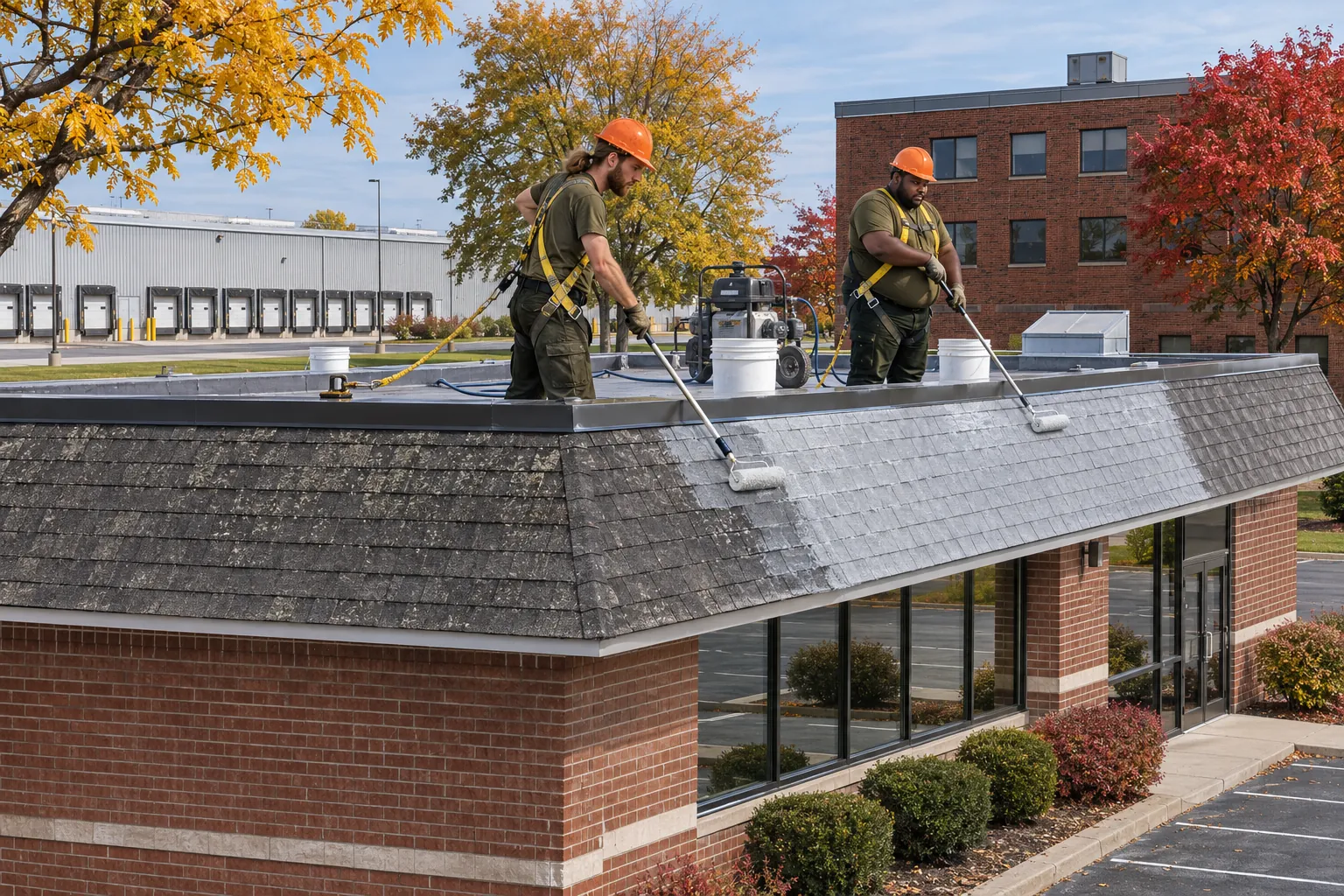
Commercial shingles still lying flat and attached.
Warehouse roofs fall within our published coating range of about $2.50 to $4.00 per square foot. Long, open roofs with few curbs come in toward the low end, while heavy rust, many skylights, and screw replacement push it up. We measure the roof and confirm its condition before giving a price.
Pressure washing and hand scraping remove scale and flaking paint first. Bare or rusted steel then gets a rust-inhibiting primer chosen for the coating that follows. Panels with holes are patched or replaced, and the base coat waits until the primer has cured.
These are among the roofs we coat most often in the area. Every screw is checked, worn ones are replaced with a larger size, and each head is sealed or capped. Laps get reinforced seam treatment before the coating ties the whole surface together.
The job covers cleaning, rust treatment, fastener replacement, seam and curb reinforcement, panel repairs, primer, and coating applied in measured coats. Panels and framing stay where they are, so the building stays in use while the roof is restored.
Melting snow refreezes at gutters, drains, and eaves, and the trapped water backs up under laps and around screws. Roofs with dried-out sealant feel it first. Sealing those joints before coating, and keeping drains clear, gives meltwater a path off the roof.
Standing-seam roofs take coating well when the seams are still locked and the clips hold. We reinforce seam laps and end joints, treat any rust at panel ends, and coat the field, leaving the seams free to move with temperature.
Firmly attached coating stays and becomes part of the base once it is cleaned and tested for adhesion. Sections that peel, blister, or chalk down to bare metal are scraped back, primed, and brought level with the rest before the new coats go on.
Get a ballpark for your metal roof, or call to schedule a walk-through of the panels.